
Mix a few drops of mild dish soap with warm water, apply the solution, wipe with a microfibre cloth or a soft brush, rinse, and dry the tiles.
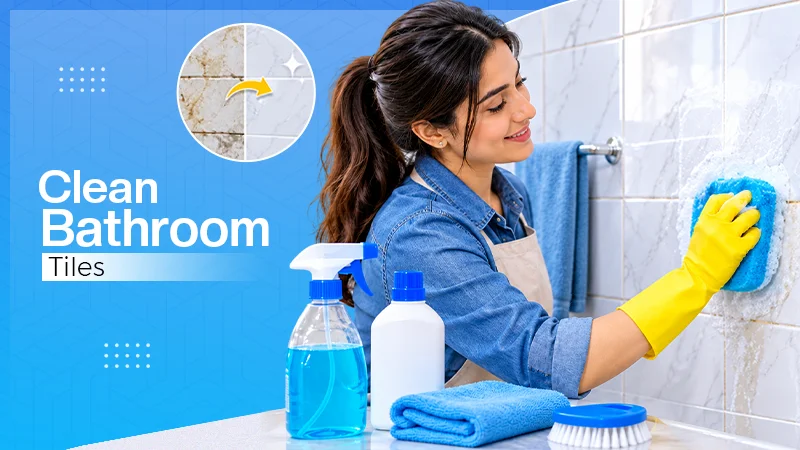
A bathroom can be absolutely beautiful with all the right fixtures, fittings, and decor, but dirty tiles will completely kill the atmosphere. Soap scum, hard water deposits, shampoo build-up, and general moisture all accumulate on the surfaces of the bathroom and leave them looking dull and stained. The grout lines are particularly prone to grime, mould, and mildew.
No need for hours of scrubbing to get your bathroom tiles clean. With the right kit and a few sensible techniques, you can learn how to clean bathroom tiles, get rid of the really stubborn stains, clean the shower walls and generally get a nice clean, fresh look. Let’s look at the simplest ways to do it.
Table of Contents:
- Why Do Bathroom Tiles Get Dirty So Quickly?
- What Do You Need and How to Clean Bathroom Tiles?
- 7 Simple Ways to Keep Your Bathroom Tiles Clean
- 6 Ways to Clean Different Types of Bathroom Tiles
- How to Remove Mold and Mildew From Bathroom Tiles
- How to Remove Tough Stains From Bathroom Tiles
- How to Clean Bathroom Tile Grout Without Damaging Tiles
- How to Remove a Bathroom Sink Stopper Before Cleaning
- How to Clean a Bathroom From Top to Bottom
- How Often Should You Clean Bathroom Tiles?
- 6 Common Bathroom Tile Cleaning Mistakes to Avoid
- How to Keep Bathroom Tiles Clean for Longer
- Final Thoughts
- Frequently Asked Questions About Cleaning Bathroom Tiles
Why Do Bathroom Tiles Get Dirty So Quickly?
Bathroom tiles pick up dirt due to the constant exposure to water, personal care products, and humidity. Common causes include:
- Soap residue: shampoo, conditioner, and soap leave a film that builds up on the tile.
- Hard water deposits: Minerals like calcium and magnesium give rise to white spots and chalky marks.
- Moisture: Poor ventilation leads to the growth of mould and mildew.
- Dirty grout: The grout is porous and will absorb moisture and dirt, leading to discolouration.
- Everyday grime: Dust, hair, product spills, etc. build up, particularly on the bathroom floor.
Thus, understanding what causes dirt and stains to build up makes it easier to learn how to clean bathroom tiles effectively.
What Do You Need and How to Clean Bathroom Tiles?
Before you start on the bathroom grime, get your cleaning crew assembled! If you think something special is required for how to clean bathroom tiles so nothing more is required.
Essential Cleaning Supplies
- Microfibre cloth: Removes grime and the annoying streaks.
- Soft-bristled brush: scrubs the grime without being too aggressive.
- Old toothbrush: gives stubborn grout lines a real makeover.
- Mop and bucket: your floor cleaning dream team.
- Spray bottle: makes applying the cleaner a doddle.
- Rubber gloves: keep your hands safe from the cleaning chemicals.
- Mild tile cleaner: pick one that’s appropriate for your type of tile.
Natural Cleaning Ingredients
Your kitchen has a couple of cleaning heroes with direct mentions of how to clean bathroom tiles
- Baking soda: Good for getting rid of light grime and stains.
- White vinegar: Breaks down the mineral deposits on the appropriate type of tile.
- Mild dish soap: Removes the everyday dirt and greasy buildup.
Quick Safety Tip: Never use vinegar on marble, limestone, or any other acid-sensitive stone. Baking soda can scratch a very delicate polished finish, so scrub very gently. Always test any cleaner first and never mix vinegar with bleach. Cleaning ka mission hai, chemistry experiment nahi!
7 Simple Ways to Keep Your Bathroom Tiles Clean
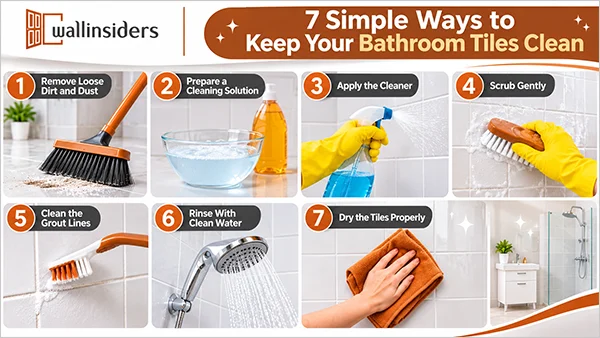
Knowing how to clean shower wall tiles properly helps remove soap scum, shampoo residue, and watermarks before they build up
Step 1: Remove Loose Dirt and Dust
Sweep or vacuum the floor to pick up any hair, dust, and debris. Wipe the wall tiles with a dry microfibre cloth. No point in scrubbing the dirt into the tiles!
Step 2: Prepare a Cleaning Solution
Just mix a few drops of mild dish soap with some warm water. Simple, cheap, and ready to go!
Step 3: Apply the Cleaner
Spray the solution over the dirty tiles (particularly around the showers and taps). When learning how to clean bathroom tiles, allow the cleaner to sit for the recommended time mentioned on the product label before scrubbing.
Step 4: Scrub Gently
Use a soft brush or microfibre cloth to remove the grime. Pay extra attention to the corners and any particularly stubborn spots; just don’t go at it like you’re polishing a car!
Step 5: Clean the Grout Lines
Use a grout-safe cleaner and an old toothbrush to get the dirty grout sorted. Don’t use a metal brush unless you really want to damage the grout and add to the mess!
Step 6: Rinse With Clean Water
Once the grout lines are cleaned, use clean water to rinse the surface to remove any traces of the cleaning solution, dirt and residue. Wipe tiles with a clean mop, sponge or bucket of water evenly. Be sure that there is no soap or cleaning solution left on the tile, which can cause it to appear dull or slippery. Focus extra attention on grout lines and corners where cleaning solution could pool.
Step 7: Dry the Tiles Properly
Rinse the tiles and use a clean microfiber cloth or soft towel to dry them. Drying properly will help to avoid water spots, streaks, and water accumulation on the surface. If the area is larger, use a dry mop to absorb the water. Make sure that the floor is completely dry before walking on it to prevent slipping.
6 Ways to Clean Different Types of Bathroom Tiles
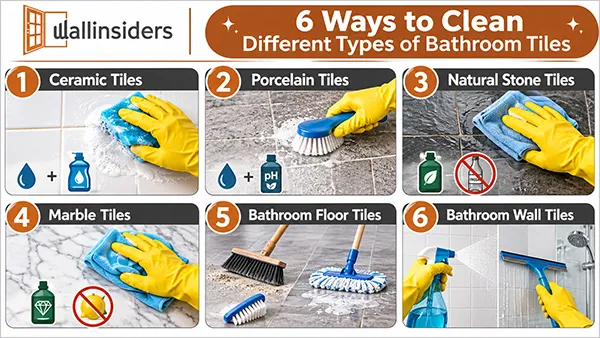
Not all tiles are created equal when it comes to cleaning! Some are quite forgiving; others are much more fussy and require VIP treatment. Using the wrong cleaner on the wrong tile can result in scratches, a dull finish, or even permanent damage. Here’s how to clean Bathroom Tiles with each type mentioned
1. Ceramic Bathroom Tiles
Ceramic tiles are pretty low maintenance, really. Just clean them with warm water and a little dish soap or a suitable tile cleaner. A soft brush for the bits that are a bit more tenacious; rinse well and wipe dry. Easy cleaning, no fuss at all.
2. Porcelain Bathroom Tiles
Porcelain tiles are very durable and easy to look after. A mild detergent or ph neutral cleaner is all that’s required. On the textured surfaces, simply use a soft brush to gently scrub, as the dirt will tend to hide in those little grooves.
3. Natural Stone Bathroom Tiles
Natural stone tiles (granite, slate, travertine, etc.) require a bit more care. As part of knowing how to clean bathroom tiles, you need to use a pH-neutral cleaner specifically formulated for natural stone. No vinegar, no acidic cleaners, no abrasive powders. They’re not stones that like to be treated harshly at all.
4. Marble Bathroom Tiles
Marble looks great, looks very luxurious, actually, but it’s quite sensitive. Clean it with a marble-safe, pH-neutral cleaner and a soft microfibre cloth. Don’t use vinegar or lemon juice, as the acid in those will cause dulling and etching.
5. How to Clean Bathroom Floor Tiles
First, sweep or vacuum the floor to remove loose dirt, dust, and hair. If you’re wondering how to clean bathroom tiles, start by mopping the floor with warm water and a suitable tile cleaner. Use a soft brush to clean grout lines and corners, rinse if necessary, and dry the floor properly. No one wants a sparkling bathroom with a nasty slip lurking somewhere!
6. How to Clean Bathroom Wall Tiles
Wondering how to clean shower wall tiles? Just rinse them with warm water, then apply a mild tile cleaner. Scrub gently to remove the soap scum and shampoo build-up (particularly around the taps and in the corners). Rinse well and then use a squeegee to get all the water off. That’s it, say goodbye to the shower stains!
How to Remove Mold and Mildew From Bathroom Tiles
The most important factor in cleaning bathroom tiles is mould; Bathroom mould loves steam, moisture, and poor ventilation. The black, green, or grey patches on the tiles and grout are its way of saying, ‘we’re not going anywhere ‘. Time to prove them wrong.
How to Identify and Remove Mold From Bathroom Tiles and Grout
Any dark spots, discoloured grout, or a musty smell? That’s likely to be mould. Use a tile-safe mould remover and gently scrub the grout lines with a soft brush or an old toothbrush. If you’re wondering how to grout shower tiles safely, use a grout-compatible cleaner and a soft-bristled brush to clean the grout lines gently. Then use a grout-compatible cleaner and avoid metal brushes and aggressive scrubbing.
How to Get Rid of Mold on Bathroom Ceilings
Trapped shower steam and hidden leaks can turn your ceiling into a massive mould problem. For small patches on washable surfaces, a suitable ceiling-safe mould cleaner (as per the instructions) will do the trick. Gloves are a must, and the area should be well ventilated. If the mould is spreading, has damaged the ceiling, or keeps coming back, then you need to call a professional. Some problems are simply beyond the scope of a quick scrub!
How to Eliminate Bathroom Mold and Prevent It From Returning
Removing the visible mould is only half the job. To stop it from making another appearance:
- Switch on the exhaust fan during and after showers.
- Open the windows to improve the airflow.
- Wipe the wet tiles and shower corners regularly.
- Sort out any leaking taps and pipes as soon as possible.
- Keep the bathroom surfaces dry and clean.
Safety Tip: Never mix bleach with vinegar, ammonia, toilet cleaners, or other cleaning products. These combinations can release dangerous fumes. Use one cleaning product at a time and follow its label instructions. We’re here to clean the bathroom, not create a chemistry disaster!
How to Remove Tough Stains From Bathroom Tiles
Not all stains are created equal! You’ve got to work out what’s causing the problem first, then choose the right cleaner. When learning how to clean bathroom tiles, pay special attention to shower wall tiles around taps, showerheads, and corners where mineral deposits tend to collect.
These are some small tips for clean bathroom tiles.
How to Remove Hard Water Stains
White chalky marks are invariably mineral deposits. Use a suitable descaling cleaner on acid-resistant tiles. Natural stone? Keep all acidic cleaners well away!
How to Remove Soap Scum
Mix some warm water with a little mild dish soap (or indeed a bathroom cleaner if you prefer). Just apply, scrub gently, and rinse. That’s it, goodnight sticky soap!
How to Remove Yellow Stains
Yellow marks can be due to mineral buildup, soap scum, rust, or old sealant. Work out what the cause is and use a tile-safe cleaner rather than just going in with a cleaner that will likely do more harm than good.
How to Remove Rust Stains
Rust will often appear around the metal taps and fixings. A tile-compatible rust remover should be used, and the instructions followed. Don’t use any acidic products on natural stone.
How to Clean Black Stains Between Tiles
Black marks could be mould, mildew, or just trapped dirt. A grout-safe cleaner and a soft brush should be all that’s required. If the stains just won’t come out, then the grout may need professional treatment or indeed replacement.
How to Clean Bathroom Tile Grout Without Damaging Tiles
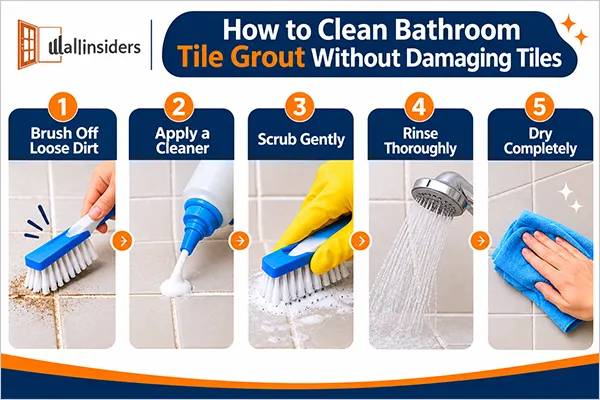
Clean tiles but dirty grout? That’s like wearing a fresh outfit with muddy shoes! Grout is porous, so it takes in moisture, soap, and all sorts of dirt, which leaves the lines looking really dull and dirty.
Here’s how to clean grout without damaging your tiles:
- Brush off the loose dirt: use a dry soft brush to remove the dust and debris
- Apply a suitable cleaner: Pick a cleaner that’s compatible with grout and follow the instructions on the bottle.
- Scrub gently: use a soft-bristled grout brush to lift the dirt without scratching the tiles adjacent to the grout or wearing the grout down.
- Rinse thoroughly: remove any remaining cleaner as per the instructions to prevent residue buildup.
- Dry completely: wipe the area down with a clean cloth and allow the grout to dry.
When Should You Reseal Grout?
When talking about grout (cement-based grout), how to clean bathroom tiles may also involve periodic sealing to reduce moisture absorption and staining. You should follow the manufacturer’s recommendations in this respect. Epoxy grout generally doesn’t require sealing at all. If the grout is cracked or crumbling, then you’ll need to repair it rather than simply seal over the problem.
Knowing how to grout shower tiles also means understanding when cement-based grout needs resealing to protect it from moisture and stains.
Pro Tip: Don’t let dirty grout be the thing that steals the show from your lovely tiles. A bit of regular maintenance makes all the difference.
How to Remove a Bathroom Sink Stopper Before Cleaning
That little sink stopper is a massive collector of all sorts of stuff! Hair, soap scum, and general grime all love to nestle underneath it and turn your drain into a miniature dirt party. Taking it out makes deep cleaning a lot easier.
How to Remove a Bathroom Sink Stopper
- Push-and-pull stopper: lift it and unscrew it anti-clockwise if it’s a removable type.
- Lift and turn stopper: lift it, find the little screw on the knob, loosen it, and lift the stopper out.
- Pop-up stopper: Look under the sink for the horizontal pivot rod attached to the drainpipe. Loosen the retaining nut, pull the rod out, and lift the stopper.
Once it’s removed, clear out any trapped hair and debris. Scrub the stopper and the drain opening with an old toothbrush and some suitable bathroom cleaner. Rinse well and reinstall the stopper firmly.
Pro Tip: Take a quick photo of the stopper mechanism before you start removing anything. Your future self will thank you when it’s time to put it all back together.
How to Clean a Bathroom From Top to Bottom
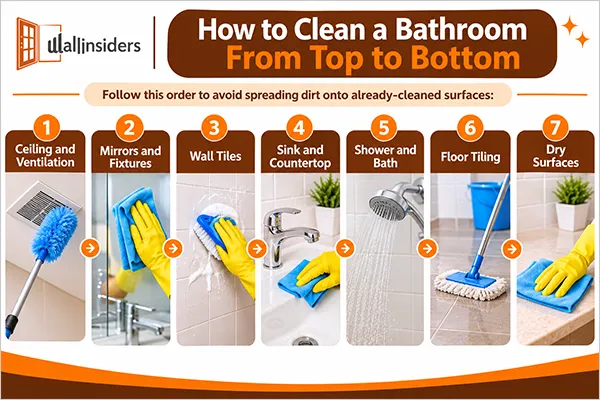
Follow this order to avoid spreading dirt onto already-cleaned surfaces:
- Ceiling and ventilation: remove the dust and deal with the mould using the appropriate products.
- Mirrors and fixtures: clean mirrors, taps, handles, and shower fittings.
- Wall tiles: Remove soap scum, mineral deposits, and dirt.
- Sink and countertop: clean of toothpaste marks and soap scum.
- Shower and bath: Scrub the surfaces, corners, fittings, and grout.
- Floor tiling: sweep first, then mop with an appropriate cleaner.
- Dry surfaces: wipe away any excess water.
How Often Should You Clean Bathroom Tiles?
A consistent cleaning schedule prevents stubborn dirt from accumulating.
| Frequency | Cleaning Task |
| Daily | Wipe shower walls and remove standing water. |
| Weekly | Clean floor tiles, wall tiles, and shower surfaces. |
| Monthly | Deep-clean grout lines, corners, and stubborn deposits. |
| Seasonally | Inspect grout, sealants, ventilation, and areas prone to leaks. |
6 Common Bathroom Tile Cleaning Mistakes to Avoid
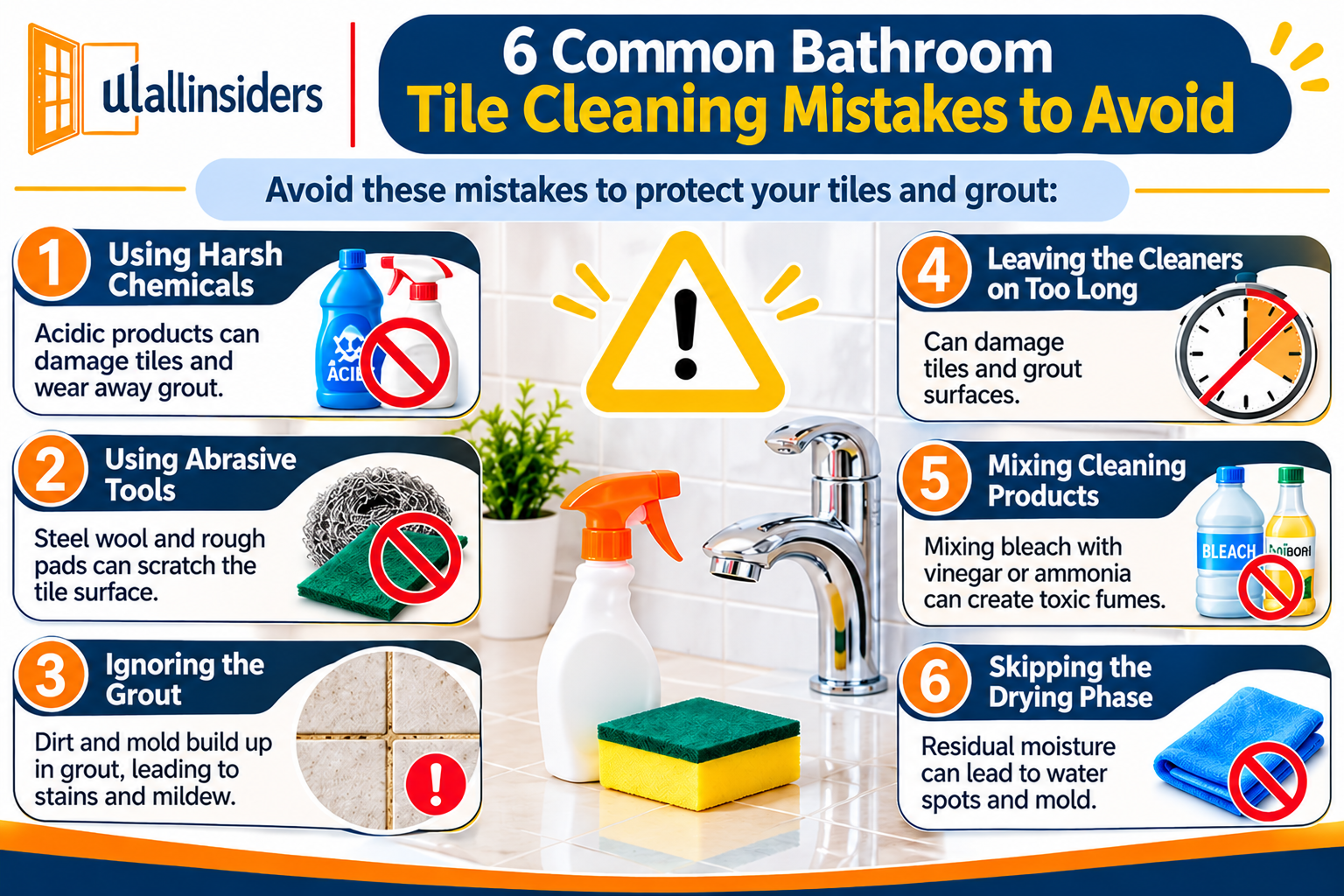
Avoid these mistakes to protect your tiles and grout:
- Using harsh chemicals: acidic products will damage marble and other natural stone.
- Using abrasive tools: steel wool and rough pads will scratch the tile finish.
- Ignoring the grout: dirt and moisture in the grout can lead to staining and mould.
- Leaving the cleaners on too long: can damage certain surfaces.
- Mixing cleaning products: mixing bleach with vinegar or ammonia will produce toxic fumes.
- Skip the drying phase entirely: residual moisture will just lead to water spots and mould.
How to Keep Bathroom Tiles Clean for Longer
One of the easiest ways to maintain clean shower surfaces is to understand how to clean bathroom tiles, especially shower wall tiles, regularly using a squeegee and a suitable cleaner.
- Use an exhaust fan whilst you’re having a shower and after you’ve finished.
- Wipe the shower walls down with a squeegee after use.
- Rinse away the soap and shampoo residue regularly.
- Fix any leaking taps and pipes as soon as possible.
- Keep the bathroom floors and corners dry.
- Inspect the grout and sealants for any cracks or damage.
Final Thoughts
Cleaning bathroom tiles doesn’t require expensive products or complicated techniques. Choose cleaners suited to your tile material, remove stains before they become stubborn, and maintain grout regularly.
Most importantly, control moisture through proper ventilation and regular drying. A consistent cleaning routine is the permanent solution for how to clean bathroom tiles. For more practical home cleaning tips and helpful guides, Wallinsider is worth exploring.
Frequently Asked Questions About Cleaning Bathroom Tiles
What Is the Easiest Way to Clean Bathroom Tiles?
How Do You Make Bathroom Tiles Look New Again?
Remove the soap scum, the mineral deposits, and the general dirt using tile-compatible cleaners. Deep clean any discoloured grout and repair any damaged grout or sealant as required.
Can Baking Soda Clean Bathroom Tiles?
Yes, baking soda will help to remove quite a bit of light grime from appropriate surfaces. Just don’t be too aggressive with it, particularly on polished or more delicate tiles, as you can easily scratch them.
Is Vinegar Safe for All Bathroom Tiles?
No. Vinegar will damage marble, limestone, travertine, and other acid-sensitive stones. It can only be used on suitable acid-resistant surfaces, and you should always check the manufacturer’s recommendations first.
How Do You Remove Stubborn Stains From Bathroom Tiles?
Identify the stain and select an appropriate cleaner. Adhere to the recommended contact time and gently scrub with a soft brush.
How Often Should Bathroom Tiles Be Deep Cleaned?
Most bathrooms benefit from weekly routine cleaning and monthly deep cleaning. High-use bathrooms may require more frequent attention.
What Is the Best Way to Clean Bathroom Grout?
For anyone learning how to grout shower tiles, a grout-compatible cleaner, a soft-bristled brush, and proper drying are essential.
How Do You Prevent Mold From Growing on Bathroom Tiles?
Improve ventilation, run an exhaust fan, wipe wet surfaces after showering, and repair leaks. Inspect grout and shower corners regularly.
Related Post
How to Clean Bathroom Tiles: Easy Methods to Remove Stains, Mold, and Grime
A bathroom can be absolutely beautiful with all the right fixtures, fittings, and decor, but dirty tiles will completely kill…