
Site development in construction is the crucial preliminary phase of preparing a raw piece of land for actual building. It transforms an empty plot into a safe, accessible, and code-compliant foundation.
Table of Contents:
- What is Site Development Construction and Why is it Important?
- Key Steps in the Site Development Process: From Planning to Construction
- What is a Site Development Plan?
- What are the Essential Components Included in Construction Site Development?
- Factors Affecting a Site Development Project
- How Site Development Affects Construction Quality, Safety, and Long-Term Project Success?
- Bottom Line
- Frequently Asked Questions
Site Development is one of the most essential parts of the pre-building phase. It is a comprehensive process of preparing raw land for construction, transforming it into a safe, accessible, and pad-ready space. This bridges the gap between land acquisition and actual building by addressing soil stability, utility routing, and environmental compliance.
Through this blog, we will get to know what site development is, its process, plan, and much more.
Our site development team manages land preparation, grading, drainage, utilities, permits, and project coordination from initial planning through construction readiness.
Table of Content:
- What is Site Development Construction and Why is it Important?
- Key Steps in the Site Development Process: From Planning to Construction
- What is a Site Development Plan?
- What are the Essential Components Included in Construction Site Development?
- Factors Affecting a Site Development Project
- How Site Development Affects Construction Quality, Safety, and Long-Term Project Success?
- Bottom Line
- Frequently Asked Questions
What is Site Development Construction and Why is it Important?
The process of site development is a crucial preliminary phase of preparing raw land for further construction. This involves assessing, engineering, and grading a property to create a stable, accessible, and code-compliant foundation. This groundwork ensures a safe, successful project before vertical construction begins.
Proper site development serves as the backbone of any successful construction project. The several reasons that make it crucial are:
- Ensures Structural Stability: Thorough soil testing and grading prevent foundation cracking, sinking, or shifting, ensuring the long-term safety of the structure.
- Improves Drainage and Erosion Control: Well-designed grading and drainage systems redirect stormwater, protecting the building from flooding and preventing land erosion.
- Guarantees Utility Access: Laying the groundwork for water, sewer, gas, and electricity ensures these vital systems are safely and efficiently accessible for the property.
- Ensures Legal Compliance: Navigating zoning laws, building codes, and environmental regulations early on prevents costly project delays, stop-work orders, or legal fines.
Key Steps in the Site Development Process: From Planning to Construction
The process is a phased journey that transforms a raw parcel of land into a fully realized physical space. It breaks down into three primary stages: planning and design, site preparation, and construction.
1. Planning and Design
Before breaking ground, stakeholders define the project’s feasibility, scope, and budget, laying out the perfect plan and design. This includes:
- Assess the economic and physical viability of the site.
- Architects sketch initial layouts, determining how the space will be utilized and ensuring alignment with the owner’s goals.
- Creation of detailed structural, mechanical, and electrical drawings.
2. Site Preparation
This phase transforms the raw, undeveloped land into a functional, stable construction site. A conventional site preparation includes:
- Mapping precise boundaries, topographic features, and existing easements.
- Removing trees, shrubs, rocks, and debris.
- Leveling the ground for stability and digging out areas for the foundation and underground utilities.
- Connecting the property to municipal water, electricity, sewer systems, and telecommunications.
3. Construction
The construction stage is the final phase where blueprints turn into a physical, functional structure. It requires strict sequencing to ensure structural safety and legal compliance. The procedure includes:
- Laying and pouring concrete to form the base of the structure.
- Building the structural skeleton of the building.
- Completing drywall, flooring, painting, and interior fixtures.
What is a Site Development Plan?
A Site development plan is a detailed, scaled architectural and engineering blueprint that illustrates the physical layout and proposed configuration of a specific parcel of land. It acts as the primary map for how buildings, infrastructure, and landscaping interact on the property.
An effective plan translates complex design data into a clear visual blueprint.
There are certain key components of a site development plan, these are as follows:
- Exact dimensions of property boundaries.
- The correct placement of building footprints.
- Layout of essential services, including water, sewage, and much more.
- Location of trees, shrubs, and open spaces.
Why is the Site Development Plan Important?
There are certain factors that make the site development plan essential before any site construction. The site development plan is crucial because it aligns your architectural vision with real-world realities, ensures legal compliance, optimizes spatial functionality, and prevents costly construction mistakes.
What are the Essential Components Included in Construction Site Development?
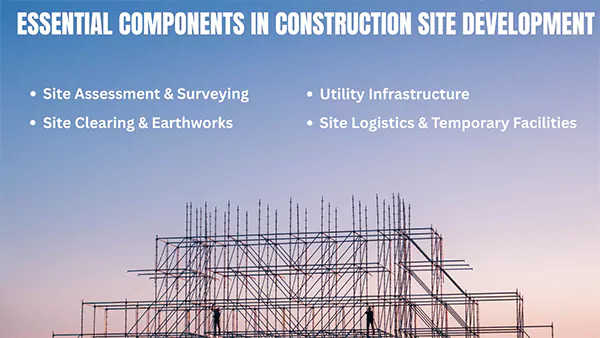
Construction site development is the foundational phase of preparing raw land for building. It involves several vital components: surveying and assessing the land, clearing and grading the terrain, installing utility infrastructure, and setting up temporary site facilities and safety zones.
The primary components and stages include:
1. Site Assessment & Surveying
Before any groundwork begins, the land must be mapped and evaluated.
- Land Surveying: Locates exact property boundaries, contours, and physical features.
- Soil Testing: Geotechnical investigations evaluate soil bearing capacity and groundwater conditions to determine foundation requirements.
- Regulatory & Zoning Checks: Verifies compliance with local building codes, setbacks, and land-use restrictions.
2. Site Clearing & Earthworks
This phase transforms the raw land into a blank canvas for building.
- Clearing & Grubbing: Removing vegetation, trees, rocks, and debris from the construction zone.
- Excavation & Grading: Leveling the land and digging for below-ground structures
3. Utility Infrastructure
Development requires foundational utility networks to support the structure.
- Water & Sewage: Connecting to municipal water lines and sewer systems or installing private wells and septic systems.
- Electrical & Telecommunications: Establishing temporary and permanent grid connections.
- Drainage Systems: Installing storm drains and grading to prevent erosion and water runoff issues.
4. Site Logistics & Temporary Facilities
Creating a functional, safe, and organized workspace is critical for ongoing construction.
- Site Offices: Space for project managers, architects, and administrative tasks.
- Access Roads & Traffic Flow: Designated routes and entry points for heavy machinery, delivery trucks, and workers.
- Staging & Storage Areas: Secure zones to store construction materials and tools safely.
- Safety Protocols: Designated first aid stations, fire extinguishers, and emergency assembly points.
Factors Affecting a Site Development Project
The project’s success hinges on a blend of location, physical characteristics, and regulatory requirements. Key factors include location accessibility for construction, topography, soil conditions, regulations, and zoning.
Apart from this, zoning and local regulations defining legal boundaries, and utility availability to support future operations, also play an equal role.
1. Location and Accessibility
- Proximity to Infrastructure: Easy access to major roads, highways, and public transit reduces logistical costs and eases the delivery of heavy equipment and materials.
- Neighborhood Suitability: The site’s location must align with its intended purpose; for instance, commercial zones require high foot traffic and visibility, while residential areas prioritize quiet and nearby amenities.
2. Physical and Environmental Conditions
- Topography and Soil: The slope of the land and the bearing capacity of the ground soil directly impact excavation and foundation costs. Unstable or contaminated soil requires costly remediation.
- Drainage and Stormwater: Managing rainwater runoff is essential. Sites prone to high water tables, flooding, or those containing wetlands face stringent regulatory requirements.
- Climate and Orientation: Natural factors like sun angles and wind directions influence the energy efficiency, design, and structural layout of proposed buildings.
3. Regulations and Zoning
- Zoning Ordinances: Determine allowable land use and dictate permissible building heights and densities.
- Easements and Setbacks: Legal restrictions and rights-of-way outline exactly where you can build on the property line and specify areas reserved for utility access.
- Permitting and Approvals: Local regulatory bodies require formal environmental impact studies and compliance reviews before construction can commence.
4. Utility Availability and Infrastructure
- Water and Sewer: Availability of municipal water and sewage lines or the necessity of establishing on-site wells and septic systems.
- Power and Connectivity: Capacity of the local electrical grid and access to high-speed telecommunications.
5. Economics and Financial Viability
- Site Preparation Costs: The baseline costs required to clear the land, demolish existing structures, and grade the property.
- Market Conditions and Labor: Local economic stability, fluctuating material prices, and the availability of skilled labor affect overall project timelines and budgets.
How Site Development Affects Construction Quality, Safety, and Long-Term Project Success?
Proper site development lays the groundwork for construction success. It eliminates hidden risks, stabilizes foundations, and optimizes workflow. This proactive phase directly reduces expensive structural defects, mitigates workplace hazards, and prevents long-term maintenance issues.
1. Construction Quality
The construction quality is one of the most crucial parts of the process further. Evaluating construction quality before the process requires verifying foundational data and the developer’s track record. Here’s a list of certain factors that are considered beforehand:
- Solid Foundations: Thorough soil testing and grading prevent issues like uneven settling, subsidence, and structural failure, providing a stable baseline for the entire structure.
- Defect Reduction: An organized, leveled, and cleared site allows for precision in building and prevents material damage from mud, debris, or poor drainage.
- Resource Optimization: Properly mapped utility layouts and access roads mean materials are staged exactly where needed, reducing double-handling and physical damage.
2. Site Safety
Before beginning any development, establishing robust safety protocols is the single most important step to prevent accidents, avoid costly project delays, and limit liability. Here’s what you need to know:
- Hazard Elimination: Clearing debris, rocks, and unstable vegetation immediately removes major tripping and falling hazards for workers.
- Optimized Logistics: Designating clear haul routes, pedestrian walkways, and distinct zones for heavy machinery prevents blind spots and cross-traffic accidents.
- Risk Mitigation: Proper grading and drainage plans prevent water from pooling, which causes unstable soil and electrical hazards during the building phase.
3. Long-Term Project Success
Long-term project success hinges entirely on the preconstruction and planning phases. Getting it right before the process begins means mitigating risks, optimizing costs, and securing approvals through thorough early assessment. Here’s everything you need to know:
- Erosion Control: Proactive grading and landscaping protect the property from long-term erosion, water damage, and severe weather.
- Regulatory Compliance: Integrating local zoning laws, environmental protections, and ADA guidelines early on protects the project from fines and legal shutdowns.
- Higher ROI: By avoiding costly mid-project rework and mitigating future structural liabilities, thorough site preparation yields a higher, more sustainable property value.
Bottom Line
Proper site development serves as the critical cornerstone of any construction project. Attempting to skip or rush this groundwork frequently leads to severe, costly consequences, such as foundation failure, budget overruns, or rejected permits.
By systematically preparing the land, stakeholders ensure a safer, highly functional, and compliant foundation upon which the vertical construction can proceed flawlessly.
Frequently Asked Questions
What is a construction site development?
What are the 4 types of construction?
The four main types of construction are categorized by their primary purpose and end-use. These are:
- Residential Construction
- Commercial Construction
- Industrial Construction
- Infrastructure Construction
What is land development in construction?
Land development is the process of preparing raw land for a specific use, such as residential, commercial, or industrial. It encompasses everything that happens before a building is constructed, following a structured lifecycle from the initial vision and feasibility analysis to physical infrastructure installation.
What are the 7 stages of construction?
Construction site development transforms an empty plot into a fully functional property through seven distinct phases:
- Conception
- Planning or design
- Pre-construction
- Procurement
- Construction
- Commissioning
- Project closeout
What is residential site development?
Residential site development is the process of preparing a raw piece of land for the construction of housing. It transforms undeveloped property into a functional, safe, and code-compliant living space, covering everything from land assessment and grading to installing utilities and roads.
Related Post
What is Preconstruction? Methods, Importance, and Benefits Uncovered
Before any major development project takes place in real estate, the role of preconstruction comes into play, as it brings…
What is Site Development? Structure & Development Procedure Explained
Site Development is one of the most essential parts of the pre-building phase. It is a comprehensive process of preparing…