
To redesign your kitchen, making it more functional on a low budget, try to employ any AI application to make a 3D layout for your place. Then, adjust the cabinets, appliances, sink, and stove accordingly.
The kitchen work triangle of three fundamental items — sink, cooktop and refrigerator — is the foundation for planning a functional kitchen, as is budget, available space and cooking habits. Include sufficient counter and storage area, select quality materials and mix task, ambient and accent lighting to create an efficient and comfortable kitchen.
Wondering how to design a kitchen? Evidently, the kitchen is the most important part of any home. It’s a designated room for storing, preparing, and cooking a meal for everyone in the household; thus, it has to be perfect!

Precisely, an ideal kitchen design is not just visually appealing but also functional, comfortable, and efficient. From following accurate kitchen design rules and storage solutions to selecting suitable appliances, lighting, and color schemes, every detail plays a vital role in designing kitchen layout.
Thus, read on to learn the 10 most crucial kitchen design tips along with the different types of layouts and common mistakes that you should avoid while remodeling your place.
To create a kitchen that balances movement, storage, lighting, and appearance, our kitchen interior design specialists can plan the complete layout around your space and lifestyle requirements.
Table of Contents:
How to Design a Kitchen? A Step-by-Step Guide
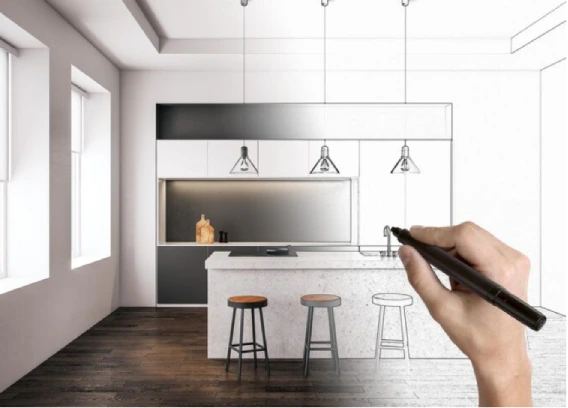
Designing a kitchen is an art, but it still does not require any complex process or planning. Hence, in this section, we have mentioned some common yet important kitchen design basics you must adhere to while designing a new kitchen; check them out.
1. Determine the Budget
Before anything, make your estimated budget plan. Consider a rough amount that you can willingly spend on renovating or remodeling the kitchen.
Although the expense bracket depends on the area, material, and design you opt for, you can still conclude an amount with the help of any professional pre-construction consulting firm.
2. Decide Upon Kitchen Appliances
If you are planning a kitchen design process from scratch, you can start by considering the dimensions of all your large appliances like a microwave, refrigerator, dishwasher, and range top. Knowing their size will allow you to plan how to place them accurately, ensuring every corner of your place is prominently used.
Besides, in case of remodeling, you still must look for appliance sizes and place them accordingly, eliminating extra and dead corners or slim areas from your ideal kitchen design.
3. Make a Layout With Appliances
Whether you are working on a large or a small kitchen, always remember one of the most important kitchen design rules, which is the work triangle. In this, you should carefully design your range top/cooktop, sink/dishwasher, and refrigerator close together.
Evidently, most of the preparation and cooking is done between these three sections (cooktop, sink, and fridge); that’s why they should be placed in three different corners, making a triangle (as shown in the picture below).
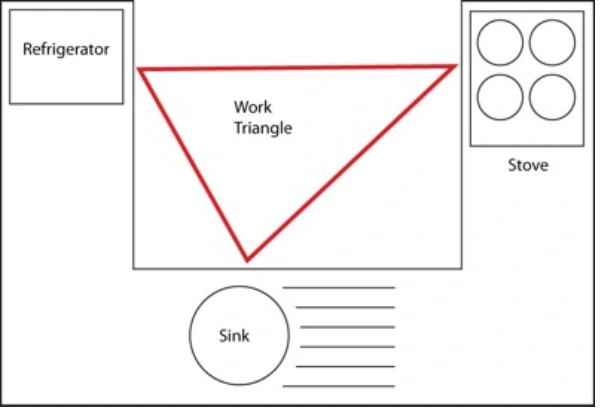
This design will provide an effective, convenient kitchen functionality while delivering a comfortable, open walking space between these sections. For this, you can use guidance from any interior design service firm and get the best layout ideas, following kitchen design principles.
4. Create Different Zones Around Appliances
After setting appliances, it’s time to create four different zones around them, including prepping, cooking, clean-up, and putting away.
- Prepping Zone: Most of the kitchen workflow, like gathering ingredients, washing them, putting prep tools away, and chopping, starts in this space. Thus, we recommend you create it anywhere close to the cooktop along with the tools and pantry essentials, so that you don’t have to move here and there.
- Cooking Zone: After preparing, you’ll move towards the cooking zone (includes cooktop/range and oven), and placing it near the preparation zone now makes all the sense. You don’t have to carry all the preps for long and conveniently shift the space for a seamless cooking experience.
- Clean-Up Zone: Ideally place your sink/dishwasher right behind the gas stove for a manageable workflow. For instance, you can easily rinse raw veggies or tools while cooking and also wash dishes while waiting for things, like eggs to boil.
- Putting Away Zone: According to kitchen design principles, this space should be created next to your refrigerator and must have things like airtight storage containers, foil wrapper, and a plastic dustbin.
5. Consider Cabinet and Counter Height, Siting & Reach
Deciding upon the cabinets’ placement and dimension is one of the most fun, yet important parts in the kitchen design process. Whether it’s about backsplash length, countertop heights, cabinet depth, or even the space between counters and appliances, everything needs to be taken care of carefully.
For example, according to principles of kitchen design, the standard countertop height is 36 inches, while base cabinet depth is around 24 inches, and for base cabinets, it’s 12 inches.
Thus, adhering to these kitchen layout rules ensures effective kitchen workflows for all. Besides, you can also opt for architectural design services to get a proper, high-end 3D visualization of your place to make better decisions.
6. Plan Entire Electrical System
Take your time and analyze your kitchen carefully to plan the electrical system for lighting, peripherals, and appliances. Firstly, think about where you plug your appliances, like the oven, fridge, vacuum cleaner, electric blinds, and also smoke alarms.
Secondly, concentrate on installing toe kick, inside, and under-cabinet lighting for easy and effective night navigation. Also, do not forget major appliances that require their own circuits, like a GFCI outlet.
Note: The entire electrical system must be done before installing the cabinets and appliances in your kitchen.
7. Carefully Determine Plumbing and Filtration System
Other than the electrical system, the plumbing and filtration system are another important aspect of the ideal kitchen design. A low or inconsistent water system can lead to big disappointment in the future. Thus, it’s your golden chance to incorporate a robust water system in your kitchen for a satisfactory experience.
Here are some plumbing kitchen design tips; take a look.
- For large-sized refrigerators, ensure a high-pressure water system.
- Opt for a high-arc, gooseneck faucet to easily fill and maneuver bulky dishware and large pots in the basin only.
- Allocate water drainage for your water purifier/dishwasher and dedicated water inlets under your sink to effectively use the storage.
- Make use of rigid or semi-rigid pipes (minimum 40 mm) that feature a proper slope for smooth drainage and prominently prevent grease blockage.
Bonus Kitchen Design Tip: Plan and group a refrigerator (water line), sink, and a dishwasher on a single, shared wet wall, minimizing overall piping and plumbing work.
8. Work Triangle Vs. Modern Zones
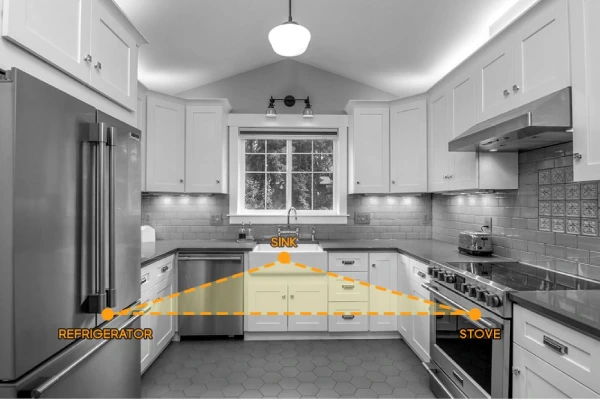
Evidently, a work triangle is one of the classic kitchen design principles that focuses on the placement of your sink, stove, and refrigerator. Whereas a modern zone is the latest trending layout that divides your kitchen into 5–6 different zones, such as prep, cooking, clean-up, storage, and more.
Below, we have presented their core differences; take a look carefully to determine which suits you the best.
| Features | Work Triangle | Modern Zones |
| Focus On | Three major sections: a refrigerator, dishwasher/sink, and stove. | Divides the kitchen into 5-6 major sections for effective workflow. |
| Best For | One-cook household with a small-scale kitchen (less than 150 sq. ft). | Multi-cook with a large, open kitchen setups. |
| Storage Strategy | Minimum; only concentrates on the storage of three appliances. | High; it significantly takes care of every appliance, tool, and even ingredients storage. |
| Flexibilty | Rigid layout; only stick to leg length and positioning. | Highly customized. Zones can be personalized as per an individual requirement and preferences. |
9. Hire Professionals
At the end, after learning all the important kitchen design tips, we still humbly advise you to take the assistance of any professional architectural firm, like Wallinsiders. Evidently, professionals always help work things out most beneficially.
They will not only help you with the kitchen design process, but also guide you through different layouts and more functional designs, that too within your budget.
10. Do Constant Inspection (Bonus)
After handing over your place to professionals, you need to do an inspection of work progress consistently, without fail. If possible, make a list of small errors or things that need to be done before finalising, preventing later disappointments.
Furthermore, sudden failures or unexpected changes are things that are not in anyone’s control, so always be ready with Plan B to deal with any sort of challenges like a pro!
What are the Different Types of Kitchen Layouts?
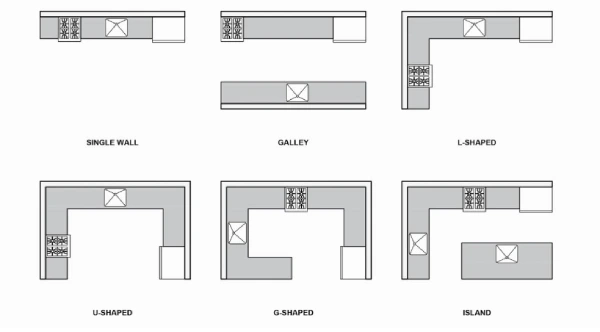
From L/U/G shaped, one-wall, and galley to island, there are six different types of kitchen layouts. Here are their detailed overviews; give it a quick read to finalize one for your place.
- L-Shaped: Ideal for small and medium-sized kitchens, this layout features counters on two adjoining walls, forming a letter L. This frees up the traffic from the cooking area, delivering open space for central tables.
- U-Shaped: Making a letter U, this layout places cabinets and appliances on the three adjoining walls, perfectly offering a large, open workspace and abundant storage.
- G-Shaped: An extension of the U-shaped layout, the G-shaped kitchen features three cabinetry walls, forming a horseshoe shape along with an extra arm that extends into the room only.
- One-Wall: Common in small houses, condos, or studios, the one-wall kitchen aligns all appliances, sink, dishwasher, and other things on a single wall, allowing effortless cooking.
- Galley: Utilizing every corner and space of the place, the galley layout features two counters opposite each other, making it ideal for a single or two-cook household.
- Island: Adapting a layout of an L- or U-shaped kitchen, the island features an extra freestanding counter for preparation, cooking, or sink chores, making things more functional and visually appealing.
What are the Most Important Kitchen Design Tips for Functional Space?
Apart from how to design a kitchen guide, in this section, we have mentioned some of the most important kitchen design tips that you must incorporate while designing a layout for your place.
- Ample Walking Space Around Cabinets and Counters: Ensure you leave enough space around your counters. So you can easily use appliances or open the dishwasher/refrigerator and still have space to stand without getting bumped in the back by anything.
- Choose an Under-Mount Sink with Stainless Steel: Always go for the undermount sink made with stainless steel that gives a classic, clear finish on the countertop. Also, remember your sink should have a deep bowl so that you can easily wash your huge dishes.
- Plan A Stove Right Behind the Sink: Placing a stove just behind your sink is one of the best kitchen design tips, making your entire kitchen chores smooth and effortless. For instance, you can simply turn to wash your raw veggies, tools, or hands within a second while keeping an eye on your cooktop.
- Place More and More Soft-Close Innotech Channel Drawers: Add as many drawers as possible in your kitchen. From behind the stove and right next to your fridge to near the dishwasher, the drawers not only provide you with open storage, but also give a sleek look.
- Organize Everyday Dishes Near Dishwasher: Try to organize at least your everyday utensils near the dishwasher or sink to easily clean your kitchen without tiring yourself.
- Determine a Proper Chimney Height: Notably, the chimney should be at least 30 inches above your cooktop to allow proper removal of smoke and grease while cooking. Also, do not place the chimney near the door; try to leave 2 inches of room around it for better functionality.
- Lighting and Ventilation: These two are common factors that are often overlooked but hold utmost importance. Proper lighting improves visibility and comfort, while good ventilation ensures fresh air circulation, creating a healthier, more pleasant, and productive environment.
What Common Mistakes Should You Avoid During the Kitchen Design Process?
Here are some of the common mistakes that many people make during designing kitchen layout. Take a look carefully so that you can avoid them while remodeling your place.
- Not Prioritizing Work Triangle Layout: Setting the refrigerator, sink, and stove too far apart or creating cabinets between them will make your prep work difficult and unpleasant.
- Installing Chimney/Range Hood Too Low: With a low height, the chimney will not be able to work properly, leading to greasy and stained walls and cabinets in the future.
- Poor Door Placement: Placing the kitchen door too close to the corners leads to difficulties in using appliances, opening cabinet doors, and wastage of small spaces that can be used for disposal or tool storage.
- Tight Walkways: Cramped space between your main counter and island can leave you frustrated and restrict movement, making your preparation, cooking, and even clean-up tasks unpleasant.
- Forgetting Electrical Circuits: Not planning enough sockets, special electrical outlets, or placing them in awkward spots is something that can be expensive to fix after finalizing the kitchen.
- Following Trends Over Timeless Furniture: Choosing trendy cabinet designs that may go out of style within a few years will not only be expensive but can also make your kitchen look outdated sooner than expected.
Wrapping Up!
In a nutshell, the kitchen is the heart of every household; no doubt, it needs to be designed with your entire attention. Hence, after reading our article, we are sure now you know how to design a kitchen for your place that is not just visually appealing, but also effortlessly goes with your everyday requirements and lifestyle.
So, what are you waiting for? Start designing kitchen layout by adhering to our guidance and adding your favourite wall colors to transform your space into a functional yet stylish culinary haven.
Frequently Asked Questions
How to design a kitchen for free or on a small budget?
What is the golden kitchen design rule?
The work triangle is prominently known as the golden rule of the kitchen. It focuses on the placement of three major appliances, such as the stove, sink/dishwasher, and refrigerator, forming a triangle shape for a more efficient and smooth workflow.
Can AI help me to design my kitchen for free?
Yes, AI can help you design effective and the best kitchen layouts for your place, that too for free. Although its capabilities and results depend on the version you are using, for precise or more accurate assistance, you still need professional help.
What is the 3×4 kitchen rule?
According to kitchen design standards, the 3×4 states that a place should have three distinct counters, including preparation, cooking, and a cleaning zone, that are strictly placed within a four-foot distance.
What design mistakes should I avoid while remodeling a small kitchen?
While designing, there are several common mistakes that you should avoid. For example, not measuring appliances, poorly positioned cabinets/drawers, wasted space between sink and stove, not enough walking space between counters, and inadequate lighting placement.
Related Post
How to Design a Kitchen? A Practical Guide to Plan a Perfect Kitchen Layout
The kitchen work triangle of three fundamental items — sink, cooktop and refrigerator — is the foundation for planning a…

What Do Interior Designers Do? Key Roles, Types, and How to Become an Interior…
Interior designers design and organize the interior of a space, making it both coordinated and safe. They translate the needs…