
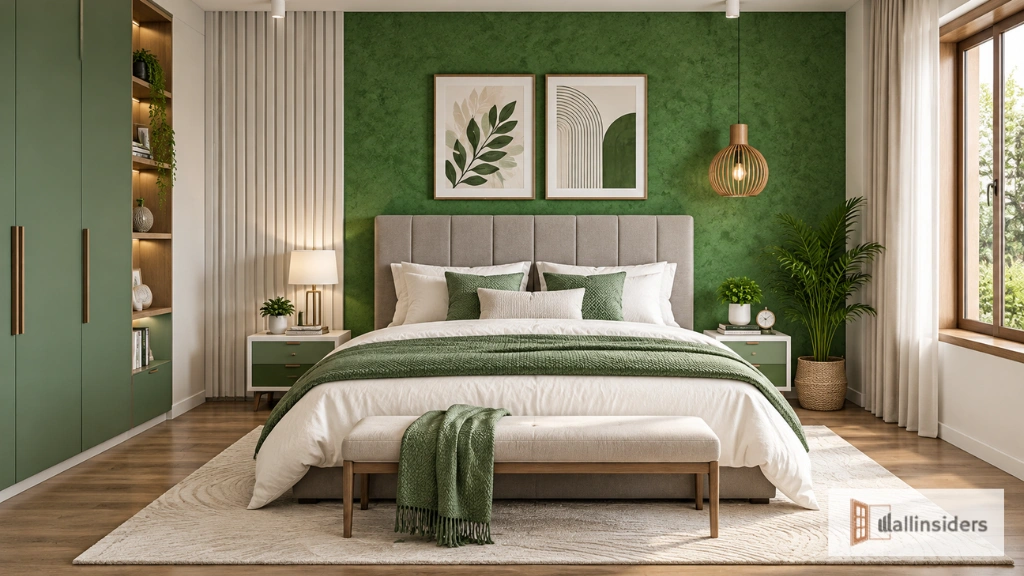
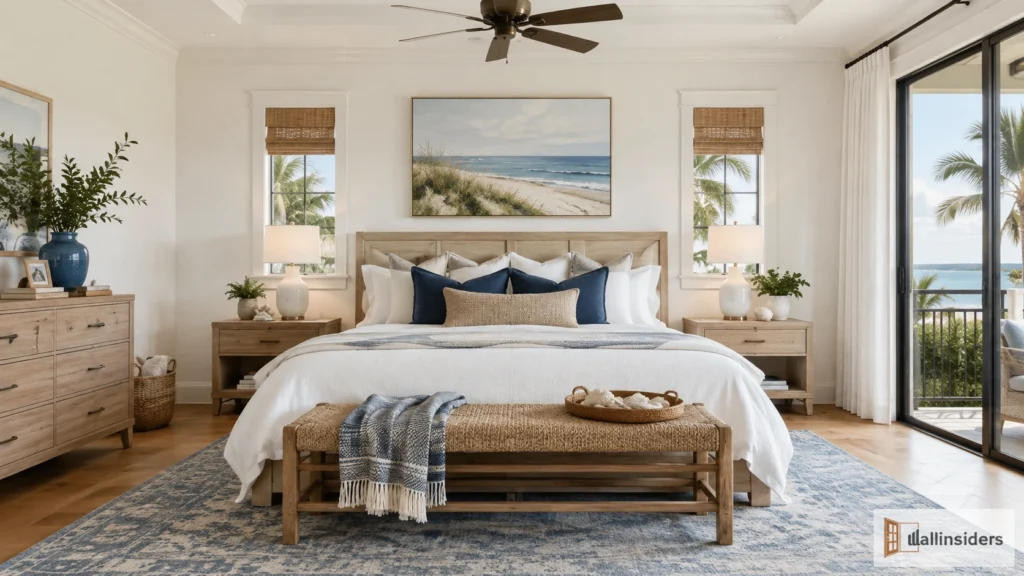
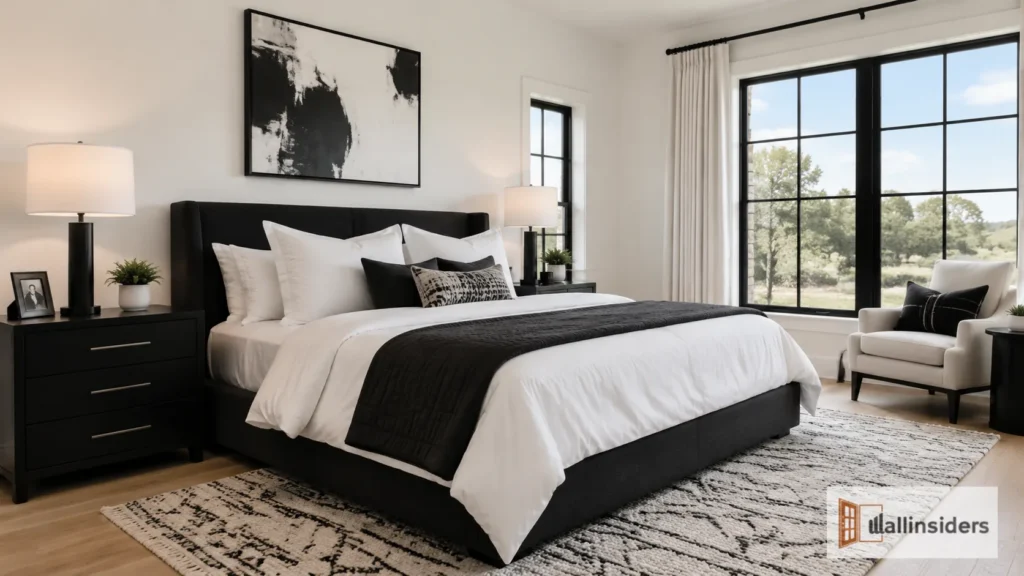
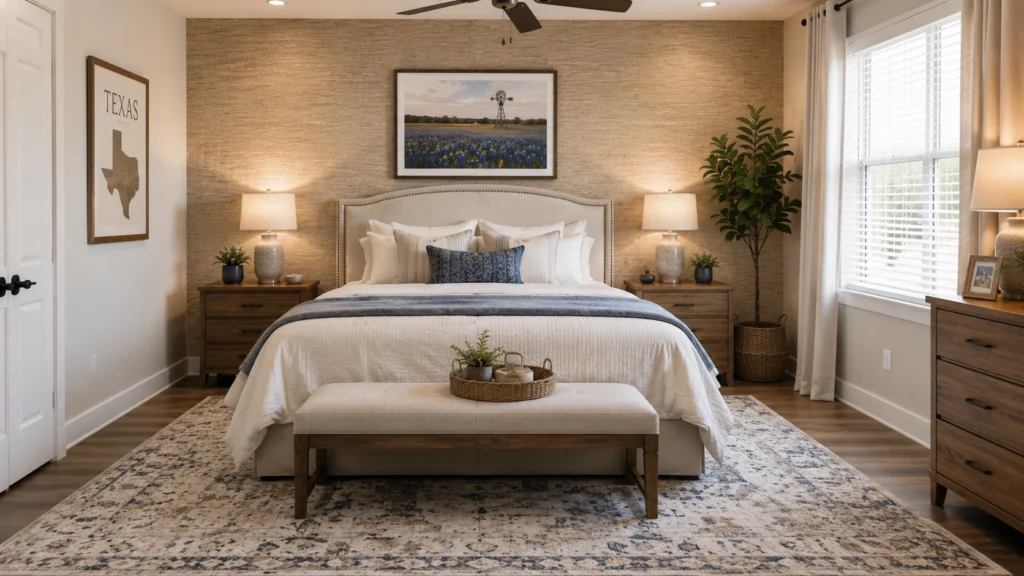
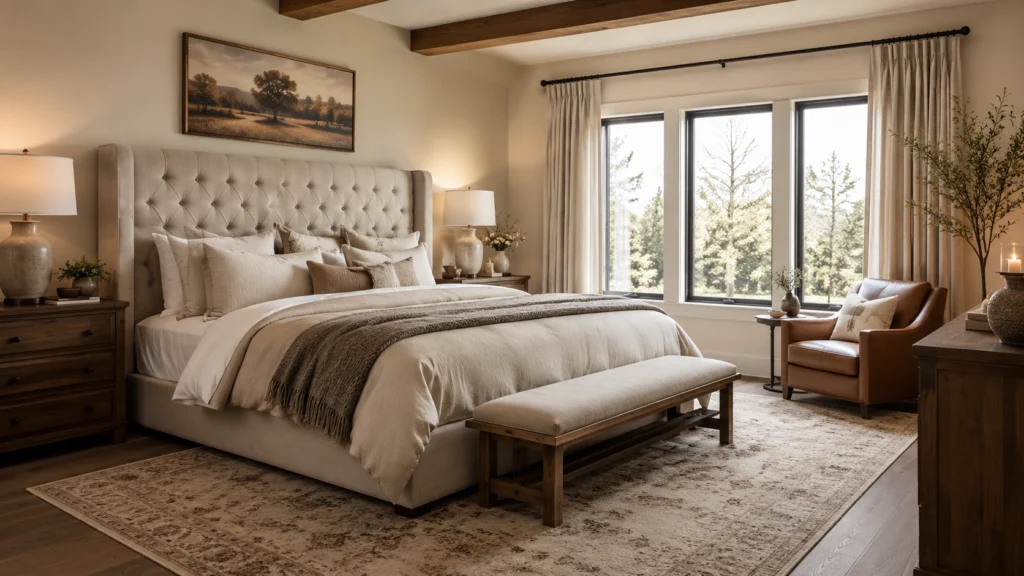


Warm white, sage green, sand, and dull blue are some of the colours people prefer for a bedroom that promotes rest. It is a good idea to try out paint samples in the room before deciding on a colour.
Showing 12 of 17 designs
Bedroom Ideas and Designs
The main role of your bedroom is to assist you in relaxing; it acts as your personal place for recharging. It should not have to do with a chair that is just sitting there with all the laundry on it and a ceiling light that seems as though it’s questioning you. On the positive side, you don’t have to bring down walls or sell a kidney to get new furniture. Simple ideas for improving your bedroom can make it more comfortable, more organised, and more stylish.
What colours help a bedroom feel restful?
A relaxed atmosphere is achieved through the use of warm neutral colours, subdued greens, muted blues, dusty blues, and earthy tones, all of which go well with natural wood, soft fabrics, and soft lighting.
If you want a more serious atmosphere, deep navy, forest green, and charcoal can make a bedroom seem cosy and sophisticated. Just combine these with warm lighting and some lighter textures.
How do I choose a headboard?
Select a headboard taking into account your comfort, the amount of space you have, and your decorating style.
If you like reading or watching TV in bed, then an upholstered headboard is a comfortable option. If you have pets or children, select a fabric that is easy to clean.
Wooden headboards are durable and easy to look after, offering a natural warmth that fits well with a variety of interior designs.
Headboards with panels: You can add some structure and visual appeal without having to introduce any additional furniture.
Create a feature behind the bed by using painted arches or wall panels, without occupying floor space.
Before you buy, measure both your bed and the wall; a headboard that is too big can have the effect of overwhelming a small room, whereas one that is too narrow may appear out of proportion.
What lighting works best?
The bedroom can be made versatile by combining ambient, task, and accent lighting.
Take a primary light fixture and use warm bulbs with a colour temperature of about 2700K, then add bedside lamps or wall sconces for reading; dimmable lighting enables you to produce a gentler atmosphere in the evening without compromising the room’s functionality during the day.
How can I add storage to a small bedroom?
Make your furniture work harder.
- Keep bedding in drawers under the bed.
- Use ceiling-height wardrobes.
- Install floating shelves.
- Pick sliding or mirrored wardrobe doors.
Make sure that the surfaces are clear, and keep items that are seldom used somewhere else, since your bedroom shouldn’t be treated as a storage room with a mattress.
How do I layer bedding?
You don’t need ten decorative cushions to make your bed look inviting.
Start with a fitted sheet, add a comfortable duvet, and finish with a throw or two cushions. Cotton and linen are breathable options that work well in different seasons.
Choose bedding in two or three complementary colours and mix textures for a finished look. If you prefer a simple routine, use fewer layers that are easy to wash and maintain.
How do I design a bedroom for better sleep?
A good place to sleep should be dark, quiet, and at a comfortable temperature.
If the light from outside is interfering with your sleep, use blackout curtains or blinds. It is advisable to select bedding that is breathable, to keep screens away from the bed, and to prevent clutter from building up in the area where you sleep.
Rugs and fabric headboards can help to reduce noise, and it’s important to place your bed so that it is not in a direct draft, making sure you have sufficient space to move around it comfortably.
Which bedroom trends are popular in 2026?
Bedroom design in 2026 focuses on comfort, natural materials, and practical details.
- Warm tones, such as soft neutrals, muted greens, dusty blues, and earthy shades.
- Natural textures such as linen, boucle, wool, timber, and matte finishes.
- Statement headboards in the form of upholstered, panelled, and arched designs.
- The walls are textured with limewash, plaster, and board-and-batten finishes.
- Lighting in layers: for example, bedside lamps, sconces, and dimmable light fittings.
- Technology that is discreet: using timers with warm light and quiet climate controls.
- Flexible layouts such as small reading nooks or compact work areas.
It’s not necessary to conform to each and every fashion trend—you should select features that match your home, your budget, and your everyday routine.
How should I style a small bedroom?
The first step is to measure the room and decide on the positions where the bed, the wardrobe, and the other essential pieces of furniture will be placed.
Select a storage bed, a tall wardrobe, and wall-mounted lamps in order to make use of the floor space. A big mirror can reflect natural light, and a uniform colour scheme makes the room seem less crowded.
Don’t use bulky furniture and make sure the walkways are clear; a small bedroom becomes more comfortable when you’re able to move about without hitting objects.
Frequently asked questions
What is the best colour for a bedroom?
How big should a bedside table be?
A bedside table is usually about the same height as the mattress or a little bit lower. In rooms that are narrow, floating shelves can be used to hold everyday items without occupying floor space.
How can I add a feature wall behind the bed?
You can use paint, wooden slats, panelling, textured wallpaper, or limewash; first measure the wall and position the feature behind the bed so that the arrangement is balanced.
Should I put a desk in the bedroom?
A slim desk or one that is fold-down can be quite suitable provided that you do not have your own separate workspace. It should, if at all possible, be kept away from the bed, and a shelf, a screen, or separate lighting should be used to differentiate work from rest.
Related Topic