
A complete home remodel can take anywhere from 4 to 12 months, as moving an entire structure requires time and patience. However, for a small renovation, like painting the entire house and making decorative changes without budging the entire structure, it can take 4 to 8 weeks maximum.

The difference between renovation and remodeling is that renovation involves only updating an existing room, such as repainting, a new floor, or new fixtures, whereas remodeling changes its structure or function, such as removing walls or transforming a garage. Most times, remodeling will be more costly, more complicated, and will need permits.
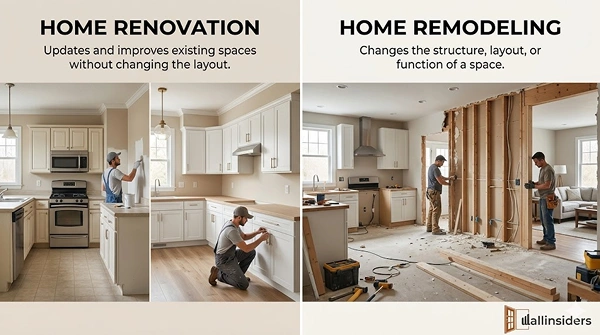
Although in most cases, the terms home renovation and home remodel are used interchangeably, their approach towards home improvement is quite distinctive. While renovation refers to modifying the existing model through cosmetic changes, remodeling focuses on improving the layout and functionality of the space.
A recent study by the National Association of Home Builders | NAHB highlights that in 2024, an estimated $670 billion was spent on remodeling projects, and roughly 20 million households undertook home improvements ranging from major renovations to smaller alterations and upgrades, suggesting the growing demand for home improvement. To plan your home improvement, this article presents renovation vs remodel, their key differences, ROI, cost breakdown, and permit requirements. Follow along to know more:
Still deciding which option suits your property? Our home renovation specialists can assess your goals and recommend the right project scope based on your budget, timeline, and required improvements.
Table of Contents:
- Renovation Vs Remodel: What’s the Key Difference and
- Remodel Vs Renovate: Which is Better for Your House?
- A Complete Budget Breakdown for Renovation and Remodeling Based on Industry Standards
- How to Finance a Home Renovation and Home Remodeling?
- Permit Requirement for Renovation and Remodeling
- Is it Worth Investing in Home Renovation or Remodeling? Pros and Cons, Completely Explained
- Wrapping Up!
- Frequently Asked Questions (FAQs)
Renovation Vs Remodel: What’s the Key Difference and
Renovation refers to updating or modifying the existing structure with minor cosmetic changes, like painting the walls, adding wallpaper, minor plumbing and electrical repairs, and more.
On the other hand, remodeling focuses on altering the entire structure to enhance functionality. Common examples of remodeling involve the conversion of a garage or basement into a living space, tearing down walls to add a room, and more.
Here’s a comparison table for renovation vs remodel to better understand:
| S No. | Point of Differences | Renovation | Remodeling |
| 1 | Primary Goal | Refresh, repair, or modernise the existing system | Changing the entire existing structure to enhance flow and functionality. |
| 2 | Expenses | Lower | Higher |
| 3 | Scope of Work | Surface-level cosmetic changes | In-depth structural and layout modifications |
| 4 | Duration of Work | Less Time: 4-8 weeks | More Time: 4-12 months |
| 5 | Permit Requirements | No permit required | Required, can be obtained from the local municipality |
| 6 | Return on Investment (ROI) | Higher than the investment | Lower, but offers long-term value |
| 7 | Project Complexity | Simple and Convenient | More Complex |
| 8 | General Examples | Painting a wall, installing a kitsch countertop or wallpaper, repairing electrical and plumbing systems | Room additions, tearing down walls, basement, garage, or attic conversion |
What is Renovation and What Does it Include?

Renovation refers to the process of restoring or refreshing an existing system, such as a living space or commercial building, to bring it back to a good and new-like condition with modern changes. According to the United States Environmental Protection Agency, the term “renovation” includes:
- Removing, modifying, or repairing painted surfaces or components, such as modifying painted doors, window repairs, and more.
- Removing building components, such as walls, plumbing, windows, and ceilings.
- Weatherization projects, like adding insulation or improving ventilation
- Interim controls that disturb painted surfaces
These changes align your space with the lifestyle and are a perfect option for homeowners who have a structurally sound place but have outdated elements and finishes. Renovating a home is less expensive and requires less time, effort, and permits, making it ideal for people who want limited disruptions.
What is Home Remodeling: Definition and What Does it Include?

Home remodeling refers to the process of altering the entire structure of the house, which involves expanding or reconfiguring an existing structure to enhance its functionality and layout. Unlike cosmetic renovation, remodeling involves major construction and reconfiguration that may require permits. A home remodeling may involve:
- Creating a new floor plan
- Converting non-habitable areas into living spaces
- Utility upgrades
- Adding a bedroom or a bathroom
- Tearing down or adding walls to make the space functional
Remodeling is expensive and consumes a considerable amount of time, effort, and money, as it affects the home’s structure and functionality. Since it’s a bigger and more complex project, it may involve permit requirements and inspection.
Remodel Vs Renovate: Which is Better for Your House?
A better option between home renovation and home remodel depends entirely on your home’s condition, budget, and long-term goals. A renovation is a smarter choice if your space is functionally sound but outdated, whereas a remodeling works well where homeowners have outgrown the space and may require adding rooms or changing the layout for enhanced flow and functionality.
House Renovation is a smart choice when:
- Homeowners want to sell their property to get a better value.
- The existing structure is sound but requires repairing, updates, and a modern look.
- There are budget and time constraints.
- Homeowners want to improve energy efficiency through ventilation, insulation, and lighting.
- Enhancing curb appeal and repairing worn out damages
A complete home remodel makes sense when:
- You’re planning for a long-term stay in the house
- Homeowners have outgrown the existing space and require a layout change.
- Increase the usage of unused spaces
- You require additional bedrooms and bathrooms.
A Complete Budget Breakdown for Renovation and Remodeling Based on Industry Standards
According to Houzz, the median renovation spending holds at $20,000 in 2025, but the high-end spending has increased from $1,40,000 in 2024 to $1,50,000 in 2025. The trends highlight that the kitchen remains one of the most important and expensive areas to renovate.
Here’s an estimated renovation budget breakdown you need to know before your financial planning for renovation:
| Renovation Area | Estimated Median Cost |
| Kitchen | <200 Sq Ft. : $35,000>200 Sq Ft. : $55,000 |
| Primary Bathroom | <100 Sq Ft. : $17,000 >100 Sq Ft. : $25,000 |
| Living Room | $4,000 |
| Dining Room | $2100 |
| Primary Bedroom | $2750 |
For remodeling, the cost can be significantly higher. According to the 2025 Cost vs. Value Report by The Journal of Light Construction, here’s the average cost breakdown of remodeling major areas of the house:
| Home Remodel Area | Estimated Average Cost (Midrange to Upscale) |
| Kitchen | $28,458 – $82,793 |
| Bathroom Addition | $60,645 – $111,255 |
| Primary Bedroom Addition | $170,517 – $351,613 |
| Basement | $52,012 |
| Roofing Replacement | $31,871 |
| Solar Power Installation | $55,937 |
DISCLAIMER!!
Most homeowners neglect the hidden costs, which may include permit fees, debris, demolition removal, post-construction cleanup, repairs, remediations, and additional contractors and installers.
Hence, it is advised to plan a contingency fund of 10-20% of your actual budget to cover the unforeseen expenses.
How to Finance a Home Renovation and Home Remodeling?

Using a government-backed option, such as the FHA Title 1 Property Improvement Loan, or using roof financing programs, credit cards with a promotional interest rate, and home equity loans are some of the best ways to finance your home renovation or remodeling.
Here’s everything you need to know:
- FHA Title 1 Property Improvement Plan: For homeowners with limited or small equity, this is the best option, as it does not require any home equity for loans up to $7,500. The interest rate is fixed, but for loans greater than $7,500, mortgaging property is required.
- Roof Financing Program: Many companies offer a roof financing program that allows homeowners to pay for a new roof through installment payments.
- Home Equity Loans: A home equity loan enables homeowners to borrow against the equity, where the borrower gets the lump sum amount and repays it through fixed monthly installments. The interest rates are lower, and these are best for remodeling the entire structure.
- Personal Savings: This is the best way to finance your home improvement, as it avoids pushing homeowners into debt. No interest payments, loan obligations, or approval process make the improvement plan easy.
- Home Equity Line of Credit (HELOC): HELOC is similar to a credit card that allows homeowners to borrow against the equity and draw and repay the funds as needed up to an approved limit.
Permit Requirement for Renovation and Remodeling
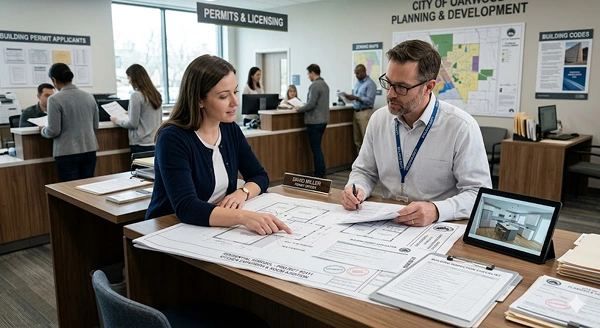
Permit requirements vary by city and locality. Generally, major structural changes that alter the property, including layout changes, plumbing/electrical work, fencing, transforming non-habitable areas, or any alteration in the home’s footprint, require a building permit from the local authority.
Here are some major structural changes that require a permit:
- Wall Removal or Addition: Adding or removing a wall requires a permit, especially if it’s load-bearing and changes the floor plan.
- Transforming Garage, Basement, or Attic: When turning a non-habitable area like a garage, basement, or attic into a livable space, a permit is required.
- Electrical and Plumbing Modifications: If you’re planning to rewire, install new circuits, upgrade panels, relocate pipes, or add new water lines, then a permit is non-negotiable.
- Window, Roof, and Door Alterations: Changing layouts, cutting out new spaces for windows and doors, and changing roof design, slope, and other components generally require a permit.
- Fencing: Height restrictions are usually placed by authorities while installing fences. Check the height requirements of your particular locality before obtaining a permit.
How to Obtain a Building Permit and What is the Estimated Cost of Obtaining the Permit?
The building permits for remodeling a house can be obtained from the respective municipality’s permitting office.
For smaller and less complex projects, the permit can be granted immediately, but for complete remodeling, multiple rounds of investigation take place, before and after the completion of the project.
The cost of obtaining permits ranges from $530-3,040, with small plumbing and electrical work requiring as little as $150.
What are the Major Changes that Do Not Require a Permit?
Small-scale changes, such as painting a wall, installing wallpaper, repairing electrical and plumbing systems, and more, do not require a permit. This renovation can be completed without hiring contractors.
Here are some changes that do NOT require a permit:
- Painting House
- Furniture of Fixture Replacement
- Flooring Replacement
- Installing Wallpapers, Countertops, or Carpets
- Electrical or Plumbing Repairs that do not Require Moving Existing Systems
Important Note:
Every municipality or locality has its own rules about which construction needs a permit. Hence, always check before starting a renovation or remodeling.
Ensure that all the required permits are obtained before renovation. Do NOT rely on contractors; complete the process with full accountability.
Is it Worth Investing in Home Renovation or Remodeling? Pros and Cons, Completely Explained
Whether investing in home renovation or remodeling is worth the expense or not depends entirely on your goals. Certain factors, such as ROI, the duration of your stay in the house, and more, affect the need for renovation or remodeling.
Both can be worthwhile investment options, but they deliver value in different ways. However, according to Houzz, Home renovation activity is continuing at levels seen in recent years, with over 52% homeowners undertaking renovation projects in 2025.
Let’s understand the pros and cons of renovation and remodeling, and whether it is worth investing in or not:
H3: How Renovation Can Be a Smart Investment?
Renovation can be a smart investment for people planning to resell their property in a few years, who have a limited renovation budget, own a structurally sound home but want a refreshed look, and for those who need improvements with minimal disturbance.
ROI Considerations While Renovating: According to the Journal of Light Construction report on the comparison of cost and value in 2025, small home renovation projects generate better ROI than bigger ones, almost doubling the cost recouped.
Although homeowners can upgrade for personal joy, not all upgrades are worth the time and money; some may fall short of providing a solid ROI.
Here are some of the best home improvements that add value to your property:
- Kitchen Upgrades: Enhanced Lighting, Cabinet Refresh, New Countertops
- Bathroom Renovation: Modern Tiles, New Vanities, Water-Efficient Fixtures
- Bedroom Improvements: Built-in Wardrobes, Closet, Fresh Paint, Wallpapers, Modern Lighting
- Smart Home Upgrades: Smart Locks, Doorbells, Lighting, Security Systems
Important Note:
While renovating your property, avoid adding luxury upgrades and extensive
Here are the pros and cons of renovation:
| Pros | Cons |
| Lower time, effort, and money than home remodeling. | It does not improve the functionality or layout of the living space. |
| Renovating a house requires no permit and permissions from the local authority. | Planning to renovate a home on your own may require a sizeable amount of time. |
| It significantly improves the ROI and resale value. | |
| Multiple renovation projects do not require hiring a general contractor, as they can be done easily at home. |
How Remodeling Can Be a Smart Investment Option?
A home remodeling project can be a smart option for people who need additional living space, want to enhance the functionality of the space with a better floor plan, and those who plan to stay in their home for many years.
ROI Considerations for Home Remodeling: A recent report, the NAR 2025 Remodeling Impact Report by the National Association of Realtors, highlights how a remodeling project often does NOT yield 100% ROI, unlike renovation, where the return is doubled and sometimes tripled. In financial terms, remodeling may not pay 100% of your money back.
Here are some top remodeling projects that promise cost recovery from 60-100%:
- New Steel Front Door
- Closet Renovation
- New Fiberglass Front Door
- New Vinyl and Wood Windows
- Basement or Attic Conversion to Living Area
- Complete Kitchen Renovation
Understand the pros and cons of home remodeling to make a better decision:
| Pros | Cons |
| It improves the flow and functionality of the living space. | Remodeling requires greater time, effort, and money, and it maximizes the disruption. |
| Remodeling supports long-term lifestyle needs by updating the structure. | It requires permits, permissions, and inspection from the concerned authority. |
| It may enhance the property value. |
Wrapping Up!
To sum up, now that you understand the basic difference between renovation vs remodel, homeowners can make a better decision depending on their goals, budget, and house conditions. While renovation enhances the value of a property and increases its ROI, remodeling can be a better option for long-term investment.
Lastly, select the option that matches your budget and style rather than spending overboard. Make a smarter choice and get the best for your property’s worth.
Frequently Asked Questions (FAQs)
How long does a complete home remodel take?
What are the best ways to handle the payments?
The best way to finance your home improvement plan is to use your personal savings or join a government-backed option, such as the FHA Title 1 Property Improvement Loan. Other options may include using HELOC, credit cards, home equity loans, cash-out refinance, and more.
Do I need to hire a general contractor for my home renovation?
Renovating a home does not always need a general contractor, as small changes, such as painting walls, installing wallpaper, and countertops, and repairing electrical and plumbing systems, can be done at home with no professional help required. However, if you lack time and expertise, then hiring a general contractor is the best way to get things done.
What are the specific conditions for which a permit is non-negotiable?
When you’re changing the layout of the space, for example, adding or removing a wall, creating a new room, turning non-habitable places, like a garage or a basement, into a livable room, changing the existing electrical and plumbing system, and fencing are some conditions that may require a permit. However, the rules are entirely based on your municipality’s requirements.
Accordion THow much does a home renovation and remodeling cost? Which is better and cost-effective?itle
The average cost of home renovation and remodeling can cost around $50,000 to $5,00,000. It entirely depends on whether you want to renovate or remodel the house, your budget constraints, and your goals.
Sources:
- What is a renovation? | US EPA: US Environmental Protection Agency
- How home improvement loans work and financing options | U.S. Bank: US Bank
- HUD : US Department of Housing and Urban Development
Related Post

What is Home Renovation Costs? Simple Techniques to Make it Affordable & Hassle-Free!
The price of home improvement depends on the project scope, size, and location — small projects can cost a few…
Renovation Vs Remodel: Difference, Cost Breakdown, Permit Requirements, and More
The difference between renovation and remodeling is that renovation involves only updating an existing room, such as repainting, a new…

Home Renovation: A Complete Step-By-Step Guide for a Beginners
Home renovation involves any repairs, updates, or enhancements made to a house in order to make it safer, more practical,…