
Both drywall and Sheetrock are similar; both are gypsum boards used in walls and ceilings for construction and renovation. The difference lies in their chemical composition and brand name. Sheetrock is a trademark registered to US Gypsum Co. and has some extra chemical additives compared to regular drywall to give it a unique identity from other distinct drywall companies.
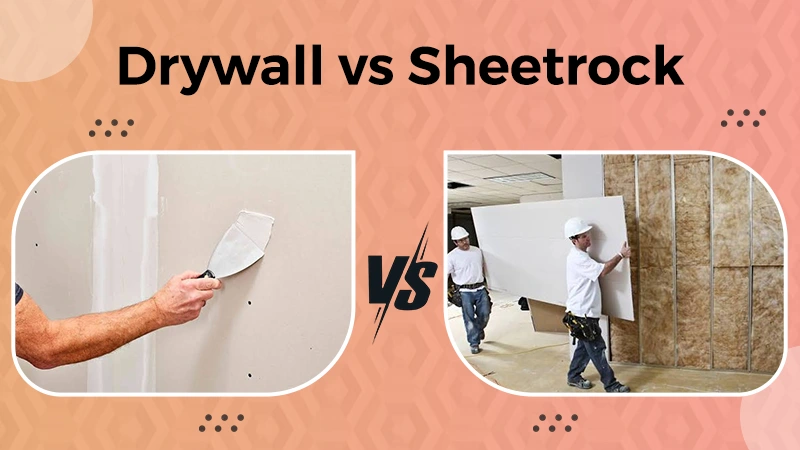
Have you wondered about the hard material behind the beautiful walls and ceiling? Well, that is drywall or Sheetrock. While drywall is a building material made from gypsum generally used in interior walls and ceilings, Sheetrock is the brand of drywall produced by a US-based company. Most people recognize both terms as the same, but differences in durability, performance, cost, installation, and repair set them apart.
In this detailed article, we will study the major differences between drywall and Sheetrock, their benefits, the cost of installation, and certain factors that determine which one to choose: drywall vs Sheetrock in your home interiors.
Table of Contents:
What is Drywall and Its Benefits?
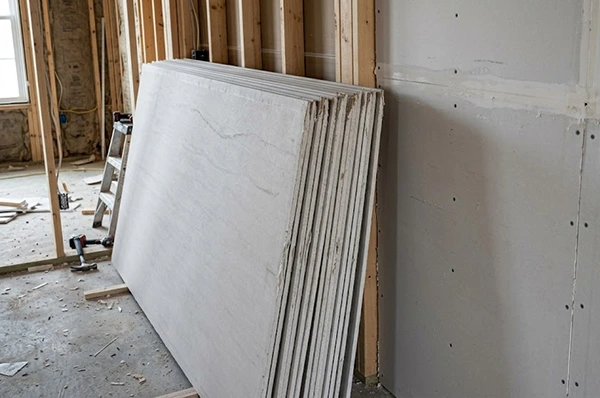
‘Drywall’ is a general term for a building construction material used in interior walls and ceilings. It is made of rocky mineral gypsum (composed of calcium sulfate dihydrate), which is mixed and put inside two thick sheets of paper, forming a board. Drywall is also called by many other names, like gypsum board, plasterboard, Gyprock, and Sheetrock.
Benefits of Drywall
Drywall is widely used as a construction material to speed up the construction process and provide strength and support to the walls and ceilings. It has numerous benefits that make it a widely popular and trustworthy material in building and home remodelling. Some of the major benefits of drywall are
- Quick Installation Speed: Drywall is installed faster than the traditional plastering method, which saves construction time.
- Versatile: Drywall can be easily cut into pieces and can be accommodated in various spaces, which makes it flexible to use.
- Fire-resistant: Due to the composition of gypsum, which contains water in its crystal structure, it helps to control the spread of fire by releasing it in the form of steam under heat.
- Cost-effectiveness: Drywalls are generally less costly than plasters, which makes them an affordable option for most of the homeowners.
- Sound Insulation: Some drywalls are designed in such a way that they do not allow the transmission of sound to the other rooms, which helps to ensure privacy as well as comfort.
What are the Different Types of Drywall?
Drywall design includes tapered edges, which help to create smooth and seamless joints and finishes. There are different types of drywall customized for different purposes, like adding additives and coatings to make them soundproof, fireproof, moisture-resistant, etc. Some types of drywall are regular drywall, greenboard drywall, paperless drywall, blueboard drywall, purple drywall, etc.
1. Regular Drywall
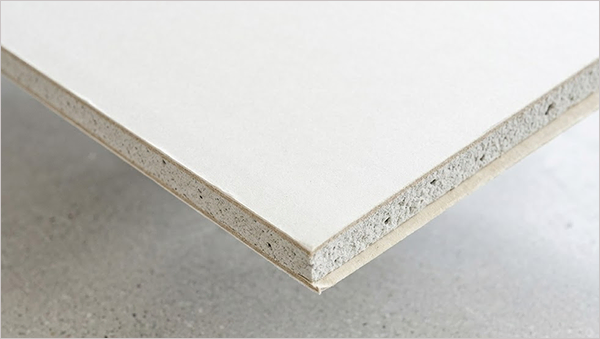
Regular drywall is the most common type of drywall used in home decor. One side is white, and the other side is brown in color. It is used in bedrooms and living areas. It is considered the most affordable option among all the other drywall used in homes. Its common size is 4 feet by 8 feet.
2. Greenboard Drywall
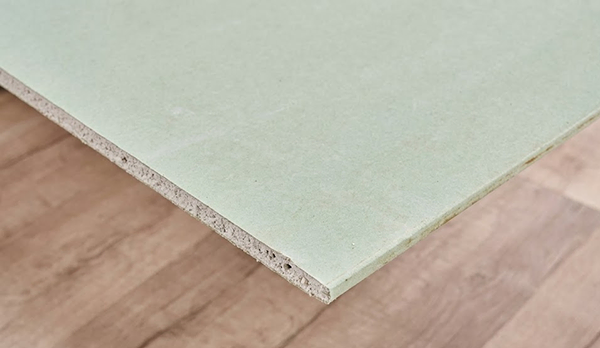
Greenboard Drywall, as the name suggests, is green in color. It has a wax coating on its paper surface, which makes it water- and moisture-resistant. We cannot say that it is fully waterproof, but it resists moisture and humidity on walls and ceilings. It is generally more expensive than regular drywall. It comes in a 4-foot by 8-foot size with ½ to ⅝ inches of thickness.
3. Paperless Drywall
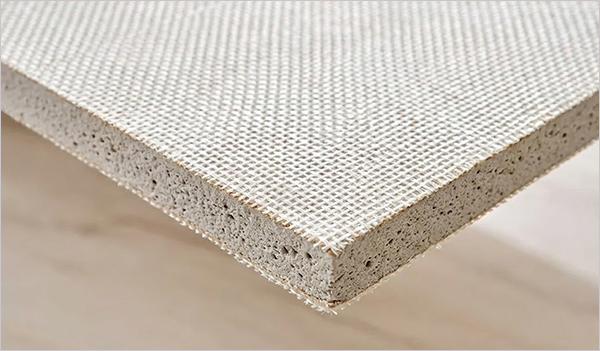
Paperless drywall is made of fiberglass and not of paper, which makes it mold- and mildew-resistant and also protects the gypsum board from rotting. It is generally easier to cut but more expensive than regular drywall. Its common size is 4 feet by 8 feet, and its thickness is ½ to ⅝ inches.
4. Blueboard Drywall
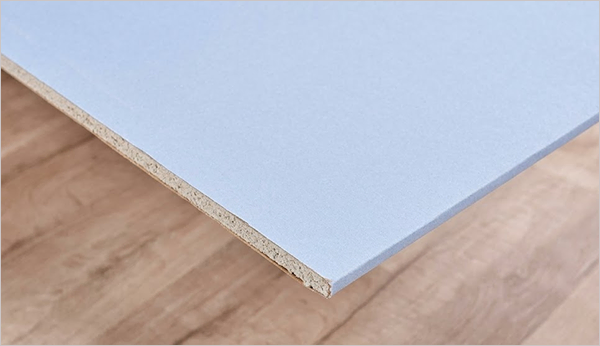
Blueboard drywall, also known as plasterboard, is mold-resistant and is mostly used in bathrooms and moisture-prone walls or ceilings. It helps with veneer plastering (thin plastering over the gypsum board). The common size is 4 by 8 feet, and the thickness is ½ to ⅝ inches, but the length can vary up to 10 to 12 feet for high ceilings.
5. Purple Drywall
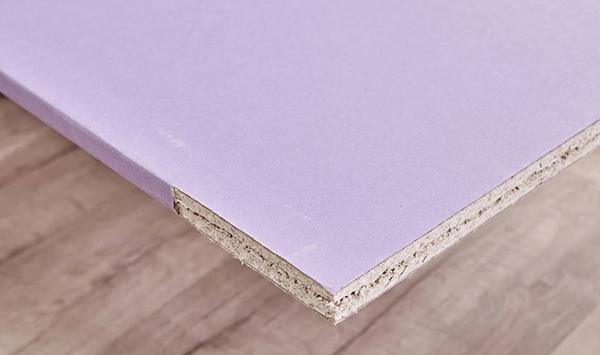
Purple Drywall is a type of drywall that is more resistant to mold and mildew. Its outer covering is made up of recycled paper, which makes it resistant to moisture. It is durable and is best suited for surfaces that are frequently in contact with water. Common sizes are 4 to 8 feet, and the thickness is ½ to ⅝ inches.
What is Sheetrock?
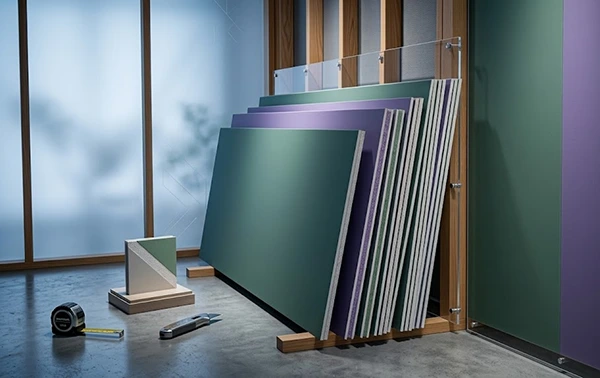
Sheetrock is not a product, but it is a brand of drywall or a registered trademark of US Gypsum Co. It is a board panel used in the interior design of walls and ceilings and is made up of gypsum sandwiched between two sheets of paper. Its purpose is the same as that of drywall: to provide easy-to-install surfaces for walls and ceilings. They have smooth surfaces and uniform thickness and are designed for high tolerances.
Difference Between Drywall and Sheetrock
While drywall and Sheetrock are similar in chemical composition, they vary in certain features like cost-effectiveness, durability and performance, installation and repair, and manufacturing and construction techniques. The important factor in drywall vs Sheetrock is the quality control and brand name. For regular home improvements, drywall is considered the preferred option due to its cost-effectiveness. In high-end residential and commercial projects, Sheetrock is preferred due to its premium brand quality.
| Differentiating Aspect | Drywall | Sheetrock |
| Popularity |
|
|
| Cost pricing |
|
|
| Durability and Performance |
|
|
| Manufacturing |
|
|
| Installation |
|
|
How to Choose the Right Drywall for Your Project?
Drywall comes in various sizes and types. To choose the right drywall for your home, you should consider some factors like your requirements, location, and use of the drywall, intended codes and regulations, budget, remodelling or new construction, and installation. After considering all these factors, you will get an idea of which drywall will suit your project.
1. Location and Use
Different areas of your home have different drywall requirements. For dry areas, you should choose standard or regular drywall; for moisture-prone areas, you can use green board drywall; for fire-prone areas like kitchens, garages, restaurants, etc. You can use fire-resistant drywall; for noisy areas, you can use soundproof drywall.
2. Budget
For cost-effectiveness, you can use standard whiteboard drywall with a thickness of ½ inch, as it is lightweight and can be cut easily and provides a smooth, neat, and clean surface to be painted easily. Standard drywall installation cost is $1.50 to $3.50 per square foot, which is comparatively less than the other types of drywall.
3. Remodelling vs. New Construction
Sheetrock vs drywall: what to choose between both of them. This question comes to mind when either doing new construction or renovation. For new construction, you can use regular drywall, as the material cost can add up to the expenditure, but for remodeling purposes, you can prefer Sheetrock due to its quality assurance and detailed perfection.
4. Thickness
For curved walls, you can use drywall with a thickness of ¼ inch, as it is flexible and gives a seamless finish to the walls. For residential homes, you can have the drywall with a thickness of ½ inch, which is widely used in homes. For big commercial projects, you can have the drywall with a thickness of ⅝ inches for added fire protection.
5. Building Codes and Regulations
Strict building codes and regulations should be followed to ensure the safety, security, and integrity of the building. For regular spaces, the thickness must be ½ inch, and for ceiling sills: ½ to ⅝ inches depending on the space of framing. For fire resistance, the fire-rated drywall (Type X or Type C) must be used. Fasteners (screws or joints) should be placed at precise intervals of 8 to 12 inches on the walls.
Drywall Installation Cost
Drywall installation costs $1.50 to $3.50 overall, including labor and materials. It depends on various factors such as cost per sq ft, material cost, labor cost, cost for drywall ceiling, cost according to the drywall type, and installation cost. All these factors add up to the total cost of installation of drywall. Below is a detailed explanation of the average cost of drywall installation.
1. Installation Cost Per Square Foot
The overall installation cost per square foot is $1.50 to $3.50; for a standard project, it costs $1600 to $2300 overall. Installation of drywall includes sheets or boards, joints, using compound, sanding, and final finishing. For hanging sheets, it costs $0.5 to $1 per sq. foot. Taping and mudding costs $0.5 to $1.25 per sq. foot. For sanding and finishing, it costs $0.50 to $1.50 per sq. ft.
2. Drywall Cost Per Room
Drywall cost differs from room to room. For large spaces, it may go up to $10,000. For a small bedroom of 10 by 10, it costs from $800 to $1800. A medium bedroom of 12 by 12 costs $1000 to $2500. A living room of 1200 square feet costs $1500 to $4000. Small bathrooms cost $700 to $1800.
3. Drywall Cost of Ceiling
The cost of the ceiling is generally higher than for the walls, as the ceiling requires fitting, bracing, specialized tools, hard labor, and gravity support. The drywall installation cost for the ceiling differs by the type of ceiling. For the regular ones, it costs $2 to $4 per sq. foot, while the vaulted ceiling costs range from $2.25 to $3.35 per sq. foot.
4. Drywall Material Cost
Material cost is about 30 to 40% of the full installation cost. For standard sheets, it costs $12 to $20 for 4 by 8 sheets, $15 to $25 for medium sheets, and $18 to $30 for large sheets. For tapes and fasteners, it costs $50 to $100 for 1000 sq. ft. For joint compound, it costs $12 to $25 for a premixed 4.5-gallon bucket.
5. Labor Cost
Labor cost is the largest factor in the drywall installation. It costs $40 to $80 per hour. Costs vary according to the installer’s experience and finishing requirements, location, ceiling height, etc.
| Labor work | Cost per square foot |
| Hanging | $0.85 to $0.90 |
| Taping | $0.50 to $1.25 |
| Mudding | $0.5 to $1.25 |
| Finishing | $1.50 to $2.50 |
| Sanding | $0.5 to $1.25 |
Common Drywall Finishing Mistakes and How to Avoid Them
Achieving the perfect accent wall includes the perfect finishing and installation of Drywall. Common mistakes to avoid while installing drywall are applying inadequate joint compound, visible tape and seams, sanding faults, poor surface preparation, using the wrong materials or tools, etc.
1. Inadequate Joint Compound:
Too little or too much joint compound can compromise the smooth finish and safety of the walls and ceilings. Instead, you should apply the manageable or correct amount of compound (1 to 1.5 gallons of joint compound per sq ft) and then spread it on the board if you have applied extra; then let it dry and sand it down to manage the fault.
2. Visible Seams
Visible seams are the result of applying too little joint compound. To fix this, you should properly place the tape in the joint compound using a drywall knife. There should be no air pockets between the surface and the tape, and then apply multiple coats and feather the edges to blend with the wall.
3. Over-or Improper Sanding
Uneven sanding occurs when either you use the wrong tools for sanding, or you apply a lot of pressure only on one area of the ceiling/wall. To avoid improper sanding, use a fine-grit sanding gauge and sand in a circular motion with light pressure. Check for minor bumps, holes, or unevenness using a flashlight.
4. Cracks in the Joint Compounds
Cracks in the joint compounds occur when you apply uneven and thick layers of compound. To fix this, you should apply an even, thin coat of joint compound. If cracks are already there, you need to sand the coat, then reapply the coat in a proper manner to give a smooth finish.
5. Not Giving Enough Drying Time
Rushing the process and not giving the suitable drying time to the coat results in cracks and mud shrinkage. To avoid this, you must let the coat dry completely and proceed according to the coat manufacturer’s guidelines on compound usage.
Conclusion
Wrapping up! In the detailed article, we studied what is drywall and Sheetrock along with their differences. Both building materials are made up of gypsum sandwiched between sheets of paper, but the difference lies in the brand name and quality. While drywall is the general term used in residential homes, ‘Sheetrock’ is the brand name for drywall.
The choice between drywall and Sheetrock depends on your requirements. For your personal projects, you can use drywall, while Sheetrock, the popular name, is widely used in big commercial projects.
Frequently Asked Questions
Are drywall and Sheetrock the same thing?
When to use Sheetrock and when to use drywall?
Sheetrock is used for large spaces and high-end commercial projects, with a high budget for quality control and precision. Drywall is used for generic, regular home construction or renovation, and that too on an affordable budget.
Plaster vs drywall: which is better?
While plaster is durable, strong, and a smooth-finishing option for ceilings and walls, drywall is the preferred option for fire resistance and moisture resistance, is faster and easier to repair, and fits the budget.
What is the average cost of installing drywall at your home?
The average cost of installing drywall is $1.50 to $3.50 per square foot. Most homeowners spend between $1,000 and $4,000, depending on the size of the home.
How much should be the thickness of the drywall?
The thickness of the drywall should be ½ inch for standard drywall used in homes, ⅝ inches for high ceilings made for fire resistance, and ⅜ inches, which is thin and used to cover old, damaged plaster.
Related Post
A Step-By-Step Guide to Building a Retaining Wall
Having a backyard slope or an eroding garden bed can quickly affect the overall appearance and charm of your landscape,…

Guide to Exploring the Best Drywall Alternatives for Your Walls
Drywall often emerges as a highly reliable option when you are looking for the best options for your walls. Drywall…
The Ultimate Kitchen Cabinet Refacing Guide
Transform your kitchen into a luxury space without the cost, mess, or weeks of disruption from a full tear-out remodel.…
What are the Stair Railing Height Requirements? Handrail and Guardrail Height for Safe Design
Have you ever wondered what the stair railing height should be in your home? Stair railing height is the vertical…
Drywall vs. Sheetrock: Types, Benefits, and Installation Cost of Drywall
Have you wondered about the hard material behind the beautiful walls and ceiling? Well, that is drywall or Sheetrock. While…

What is a Barndominium? Benefits, Floor Plans, and Cost Guide for Building a Barndominium…
In recent years, people have been looking for houses with more versatile design, functionality, and cost-effective construction with aesthetic appeal.…