
The standard kitchen countertop width is 25-26 inches with space for a 24-inch-wide cabinet and 1.5 inches for a small overhang.
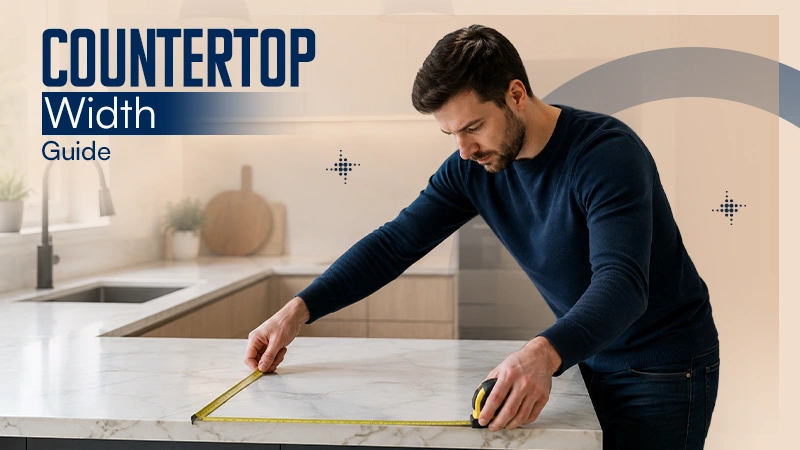
Kitchen countertops typically range in depth from 25 to 26 inches and will be 34 to 36 inches above the 24-inch deep base cabinets with a 3-inch overhang in front. Kitchen islands are generally wider to sit, and bathroom vanity countertops are shallower; exact dimensions should factor into clearances for the appliances as well as walking space.
Countertops in kitchens and bathrooms are not just about the design choice, its measurement is an equally important factor. It directly affects their safety, comfort, and function. Therefore, learning the dimensions not only makes it easier to design a kitchen but also helps you get the right layout that is convenient, functional, and eye-pleasing.
If you are planning to get new countertops, come along and explore how wide are countertops, detailed steps to measure their dimensions, and factors that influence their width.
Table of Contents:
A Quick Table of Standard Countertop Measurements
Whether thinking of remodeling for a timeless bathroom design or small kitchen design, countertop dimensions are a crucial factor that helps in easy installation.
Take a look below at the quick table of countertop dimensions before moving forward to the detailed discussion:
| Measurement Type | Standard Range | Purpose |
| Countertop Height | 34–36 inches | To match the ergonomic height so that tasks can be done efficiently. |
| Countertop Width | 25–26 inches | To fit the standard 24-inch cabinet with overhang. |
| Countertop Thickness | 1.25–1.5 inches | For providing strength and stability. |
| Kitchen Island Width | 36–48 inches | Allows prep and seating space. |
| Bathroom Vanity Width | 19–22 inches | To offer handwashing and basic storage. |
| Bar Counter Width | 16-24 inches | Allows comfortable sitting and saves floor space. |
Also Read: What is Site Development? Structure & Development Procedure Explained
Standard Countertop Measurementsc
The standard countertop measurements include a height of 34–36 inches, width of 25–26 inches, and a thickness of 1.25–1.5 inches. Kitchen islands are commonly wider, about 34-36 inches, and bathroom countertops are narrower, around 19-22 inches. These dimensions people commonly follow in their home renovation.
Here are the measurements of height, width, and thickness of a standard countertop:
Countertop Height Measurement

The average counter top height is about 34 to 36 inches. It is designed keeping in mind the average adult to ensure the comfort position. This is considered the ideal ergonomic height at which tasks can be done efficiently by the user of average height of between 5 feet and 3 to 5 inches.
Countertop Width Measurement
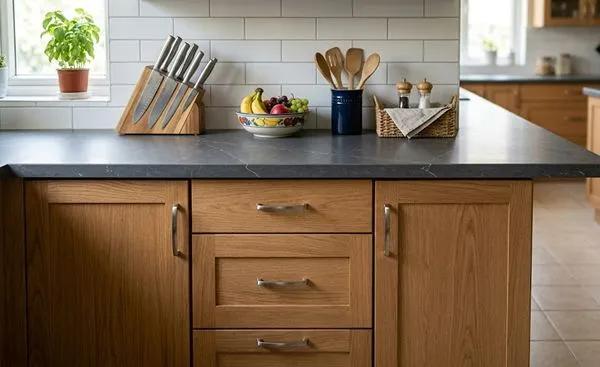
How wide is a countertop? The standard width of countertop is 25 to 26 inches. It is generally measured from the wall to the edge. This width allows space for a 24 inches base cabinet and a small overhang of about 1.5 inches. Some people measure it up to 28 inches, but it’s unusual to find it larger than that.
Countertop Thickness Measurement
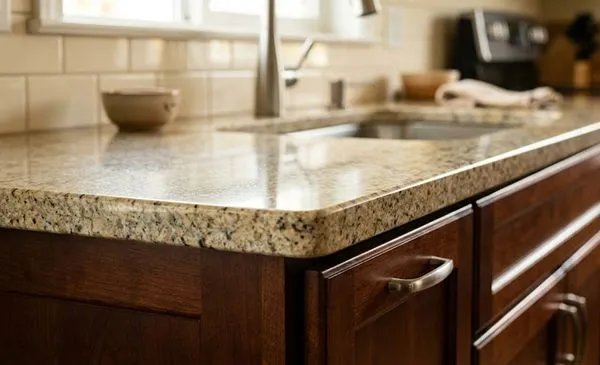
The standard thicknesses for a countertop are usually 1 cm, 2 cm, or 3 cm. 3 cm (1.25 inches) works well for most countertops, including quartz and porcelain. Mostly fabricators, designers, and architects follow this as it offers various colour options, durability, and size flexibility.
However, you may get the 1 cm thick ones that are budget-friendly. The ultra-thick designs of about 5 cm are also available through edge lamination.
Kitchen Island Countertop Width
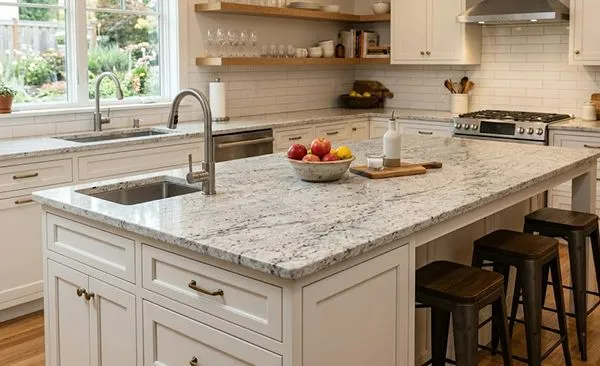
The kitchen island countertops are pretty different; they don’t sit against the walls, offering you enhanced flexibility. Its width may range from 30 to 48 inches. If you want a space without seating, the minimum width is 30 inches. Adding seating, the kitchen counter width increases to 36 to 48 inches, including about 12 inches wide overhang.
Bathroom Countertop Width
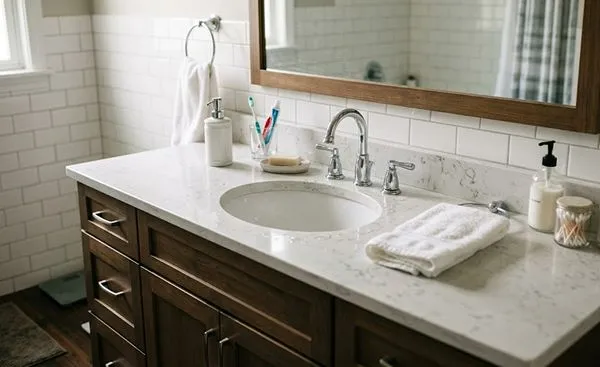
Bathroom countertops serve a different purpose compared to kitchen countertops. Here, you don’t need space for food prep but only for keeping toiletries, grooming tools, and a sink. The normal countertop depth for a bathroom is 19 to 22 inches. In larger double sink setups, its width may range from 60 to 72 inches.
Bar Counter Width

Bar counter width may range from 16 to 24 inches depending on whether its purpose is only for drinks or dining is also included. The average countertop width is designed to allow comfortable sitting and save space.
Next Read: How to Paint a Room Yourself: A Step-by-Step Guide for Beginners
Steps to Measure Countertop Dimensions: Easy 5 Steps
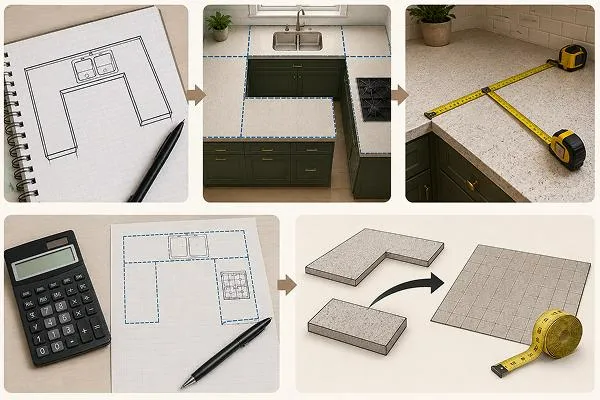
Accurate countertop measurement is important to understand the cost estimates and allow flawless fabrication. You can follow the 5 steps to measure the countertop, such as creating a sketch, dividing the counterpart in rectangular sections, measuring the length and width, calculating and converting the area.
For this, you will need the following materials:
Materials needed to measure countertop
- Tape measure
- Pen
- Paper
- Calculator
Let’s see the steps now:
- Step 1: Start by drawing a sketch of your existing countertop surface, including the island and backsplash. Don’t overlook the placement of sinks and appliances.
- Step 2: Now divide the counter in the rectangle sections on your drawing. This will help you prevent overlaps and simplify the measurement of complex shapes like U or L-shaped counters.
- Step 3: Measure the length and width of each divided rectangle. If you already have overhang or want to have one with the new surface, ensure you add extra width for that in the measurements.
- Step 4: Next, multiply the length of each rectangle by its width to get the area in square inches. Mark each section on the drawing so you can keep track.
- Step 5: Now add the area of each section to get the total square inches area. As the supplier will quote the price in square feet, convert it to the correct units. Divide the area in square inches by 144 to get the square feet measurement.
Factors that Influence the Countertop Width
Though there is a standard countertop depth for kitchens, bathrooms, and other spaces, many people don’t follow the rule book. Factors like space, ergonomic standards, and intended use often affect the width of the countertop.
Take a look below to learn about these factors:
- Space Availability: Factors like room layout, traffic flow, and floor plan influence the average countertop width. It’s important to comply with the ADA guidelines in public buildings and commercial spaces, including work surface heights and knee clearance for wheelchair users.
- Ergonomic Standards: The height and depth are adjusted according to the average height of a person. It is often customized for taller or shorter people to ensure comfort in cooking or washing.
- Function and Intended Use: The width of the countertop depends on the purpose. For instance, a kitchen counter for meal prep, a bathroom vanity for some storage, and a bar counter for commercial service. The dimensions are different according to the intended use.
- Appliance Integration: Various built-in appliances like sinks, cooktops, and commercial refrigeration often affect the counter width for seamless installation.
- Material Limitations: There are distinct maximum slab widths and seam placements for materials like natural stone and engineered quartz that influence the counter dimensions.
How Countertop Width Affects Functionality
Countertops are not just about filling space, it impacts on the usability of the kitchen and bathroom area. It directly affects how safely you can prepare food and dictates the daily maintenance efforts.
In Kitchens
Kitchen counter dimensions certainly affect functionality. If it is too narrow, you won’t get enough space for cutting boards, bowls, and appliances. On the other hand, if it is too wide, reaching for things near the back will get uncomfortable.
In Bathrooms
Similarly, bathroom counter top width also matters and affects daily functions. For instance, a too narrow counter will feel cramped, especially if you like leaving things out. On the other side, a too wide counter may provide great space but should fit into your bathroom layout.
Countertop Material Cost Per Square Foot
In 2025, the average homeowner spent $3,139 on the upgrade of kitchen countertops, with most projects falling between $1,851 and $4,454. The cost of countertops differs significantly based on their materials, such as granite, laminate, tile, and marble.
Let’s see the average installed costs per square foot according to each material:
| Material | Approx. Costs (Per Square Foot) |
| Granite | $10-140 |
| Quartz | $15-70 |
| Laminate | $20-50 |
| Butcher Block | $50-75 |
| Concrete | $70-105 |
| Tile | $40-80 |
| Marble | $70-150 |
| Porcelain | $40-100 |
Also Explore: How to Buy a House in 2026: Step-by-Step Guide and Tips to Follow
Final Words
As you have now understood how wide are countertops, you can easily decide the feel and function of your kitchen or bathroom space. In the renovation or remodel of your home, the countertop measurements often get overlooked, but they greatly affect the daily comfort and functionality.
Whether you go for the standard width of 25-26 inches or want a custom design, the counter width undoubtedly ensures durability, convenience, and efficiency.
FAQs
How wide is a kitchen countertop?
Does countertop thickness affect strength?
Yes! The thick counters resist the impact better and support more weight, but the material also matters.
Can the countertop width be customized for the kitchen?
Yes! The customization of kitchen counters is very common to accommodate the appliances and meet accessibility needs.
How do I measure an L-shaped or U-shaped countertop?
To measure the L-shaped or U-shaped counters, the best method is dividing the counter into separate rectangular sections. Measure the length and depth of each section separately and later combine the areas of all.
How much countertop overhang is standard?
The standard countertop overhang width is 1 to 1.5 inches, which extends beyond the face of the base cabinets.
Sources:
- 9 Best Types Of Kitchen Countertops – Forbes
- Kitchen Planning Guidelines with Access Standards – National Kitchen and Bath Association
Related Post
What is Home Remodeling? Types, Benefits, Cost, and Home Remodeling Process
When people step into the remodeling process, they don’t have information about design and layout changes. To help homeowners, I’ve…

Sunroom Addition: Ideas, Cost & Design Guide
Want to add extra space in your home? With having the feel of openness and brightness, a sunroom addition is…
A complete guide to transom windows – know what it is
Have you seen a small window just above the door? This is not only for decoration; it is a transom…

Ideas, Types, Benefits & Complete Guide of Outdoor Fireplace
If you want your backyard, patio, or outdoor living area to be comfortable and livable, then an outdoor fireplace is…

Latest Home Decor Trends to Follow in 2026 for a Stylish Home
The way you design your home reflects your entire personality; hence, it is necessary for your interior to speak your…

Exterior Painting Cost in 2026: A Guide to Getting the Best Painting Prices
Planning to give your home a fresh look with a coat of paint? Not only color, but painting a house…