
A single family home is a standalone unit, which does not share its walls with neighbours, and has its own entrance, kitchen, bathrooms, and living spaces, built on its own piece of land.

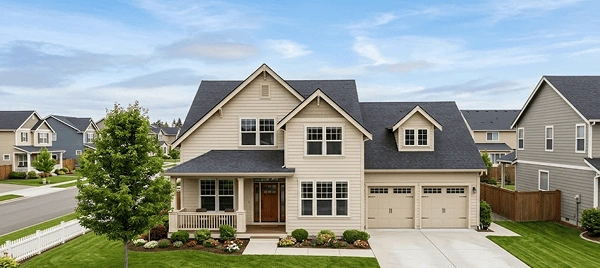
According to the National Association of Realtors, the existing-home sales increased by 3.2% in May 2026, highlighting the growing demand for single-family homes, which are detached residential units, designed for one household, with common areas, such as a kitchen, bathroom, and hall, and typically offer the exclusive ownership of both the land and the property.
A report by NAR, called the 2025 Home Buyers and Sellers Generational Trends Report, highlights that detached single-family homes are the most common type of home purchased, which is approximately 75% of all homes purchased, as they offer more privacy and fewer restrictions. Whether you’re a first-time buyer upgrading to a larger home, this article will help you understand what a single family home is, its pros and cons, the cost of buying, and more.
When planning a single-family home, our pre-construction team can help establish the budget, timeline, site requirements, and potential risks before construction begins.
Table of Contents:
- What is a Single Family Home? Key Features, Pros, and Cons of a Single-Family Home
- Differences Between Different House Types: Multi-Family Home, Condo, and Townhouse
- Complete Cost Breakdown of Buying a Single Family Home in 2026
- Key Factors to Consider While Buying a Single-Family Home
- Is a Single-Family Home Good For You? Common Mistakes to Avoid While Buying a Single-Family Home
- Wrapping Up!
- Frequently Asked Questions (FAQs)
What is a Single Family Home? Key Features, Pros, and Cons of a Single-Family Home
According to the National Association of Realtors, a single-family home is a freestanding property with one owner, intended for residential use by one family. In simpler words, it is a standalone unit, which does not share its walls with neighbours, and has its own entrance, kitchen, bathrooms, and living spaces, built on its own piece of land.
Key Features of a Single Family Home
Having a private entrance, kitchen, bathroom, hall, rooms, and land are some of the key features of a single-family home.
Here’s everything you need to know:
- Detached Structure: A single family home is usually a standalone residential unit, which does not share its walls with neighbouring homes, and hence, offers greater privacy and less noise.
- Exclusive Land Ownership: In the case of a single family home, homeowners own both the house and the land it sits on, including the garage, backyard, front yard, and other outdoor spaces.
- Designed for One Household: These homes are usually designed for occupancy by one family. It may be small or large, with a different number of rooms and commonly shared areas, such as a kitchen, bathrooms, and a hall.
- Sole Owner: The property is owned by a single owner, and hence he or she is responsible for the maintenance, upkeep, and repairs required in a home.
Pros and Cons of Having a Single Family House
Buying a single family home can have its own advantages and disadvantages. While it leads to property appreciation, more space, privacy, and no restrictions, it comes with a hefty upfront purchase price.
Here are some pros and cons:
| S No. | Pros of Having a Single Family Home | Cons of Having a Single Family Home |
| 1. | Freestanding residential units do not share their walls with neighbours and hence, offer greater privacy and autonomy over your property. | The upfront cost of buying a single family home can be higher, requiring a more substantial mortgage and down payment. |
| 2. | Single-family homes are known for their value appreciation and are considered a great investment option. Usually, they are sold for more than what you’ve paid to buy the house. | The homeowners are solely responsible for all the maintenance and repairs, which can be expensive and time-consuming. |
| 3. | These homes allow homeowners to get their homes customized as per their preferences. There are absolutely no restrictions on renovation, painting, or changing layout. | Single-family homes may lack amenities that come with condos, such as pools, gyms, and playgrounds. Upgrading it with such amenities can be even more expensive. |
| 4. | Single-family homes offer more space to the family, while also allowing them to create an upper floor for better space or earn rental income. |
Differences Between Different House Types: Multi-Family Home, Condo, and Townhouse
Houses can be of different types, such as condo, single family home, townhouse, and more. It is important to understand the difference before selecting one.
Difference Between Single Family Home and Multi-Family Home
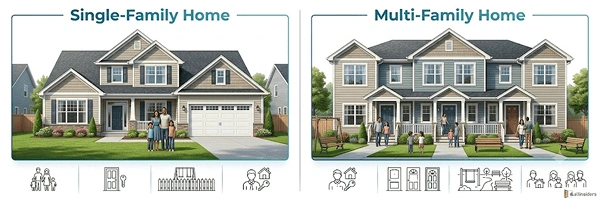
The primary difference between a single-family home and a multi-family home is that while a single family home is a standalone unit, designed for 1 small family, a multi-family home can have two or more residential units, with their separate amenities within the same building. However, they are also different in terms of their investment potential, ownership, upfront pricing, maintenance, and more.
| S No. | Features | Single-Family Home | Multi-Family Home |
| 1. | Definition | It is a standalone property designed for single families. | Multi-family homes have two or more separate housing units, each with its own kitchen, bathroom, and entrance. |
| 2. | Bought By | Usually bought by single families for long-term stay. | Generally, investors and people seeking to cover mortgages buy multi-family homes to rent out. |
| 3. | Investment Potential | It builds equity through appreciation. | Best investment potential, as it offers both property appreciation and rental income. |
| 4. | Purchase Price | The purchase price is lower than that of a multi-family home. | The upfront purchase price is higher, but it can generate rental income. |
| 5. | Maintenance | The homeowner is solely responsible for all maintenance and repairs. | The property owner or landlord oversees all the maintenance and repairs, or may hire a professional property management. |
| 6. | Financing | Traditional mortgage system, often with zero or low down payment. | Small families may qualify for residential mortgages, but large complexes (5+ units) may require commercial financing. |
| 7. | Ideal For | Small families, first-time house buyers, seeking more privacy and outdoor space. | Large families with separate living needs, investors, and owner-occupants looking for rental income. |
Difference Between Single Family Home, Township, and Condo
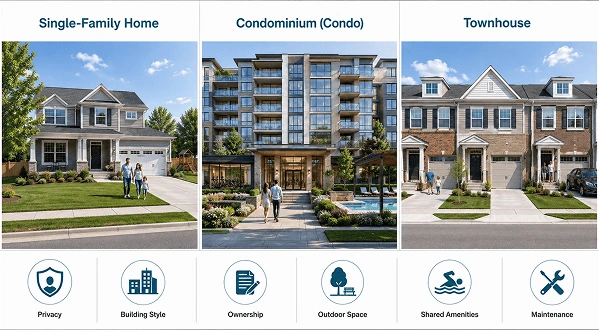
| Features | Single Family Home | Township | Condo |
| Ownership | Owned by a single family. | It’s a multi-level home that allows ownership of both the land and the house. | Offers ownership of an individual unit, while common areas are jointly owned. |
| Maintenance | Homeowners are solely responsible for the maintenance and repairs. | The outdoors is usually maintained by the township owner or the township federation. | Homeowners Association (HOA) or condo boards are responsible for outdoor maintenance. |
| Privacy | Greater privacy with no shared walls. | Moderate privacy due to shared walls. | Lowest privacy due to shared walls, common areas, and amenities. |
| HOA Fees | No HOA Fees | Often required for maintenance of shared amenities. | Compulsory HOA fees for maintenance. |
| Ideal For | Single Families planning for long-term stay and multi-generational living. | Families seeking convenient, low-maintenance, and safe spaces. | Ideal for people seeking low-maintenance homes, first-time buyers, and professional workers. |
Complete Cost Breakdown of Buying a Single Family Home in 2026
According to the United States Census Bureau, the median sales price of new houses sold in May 2026 was $424,900. However, there are certain costs, such as a down payment, mortgage payments, closing costs, inspection and appraisal costs, and moving costs, that need to be considered before making a final decision.
Here’s a complete cost breakdown:
| Expense | Average Cost |
| Down Payment | 15-20% of the purchase price Example: If you buy a house for $4,24,900, then the down payment will be $4,24,900*15% = $63,735 |
| Closing Costs | 2-5% of the purchase price |
| Inspection Fee | $300 – $600 |
| Appraisal Fee | $300 – $700 It depends on the size and location of the property. |
| Cash Reserve | Approx Two Months of Mortgage Payments |
| Moving Out Cost | $800 – $1,200 |
| Property Taxes | 1-2% of the home’s value per year |
| Homeowner’s Insurance | $1,500-$3,000 per year |
These are some essential costs to consider before buying a house. Cover these costs while determining the budget for purchasing a single family home.
Key Factors to Consider While Buying a Single-Family Home
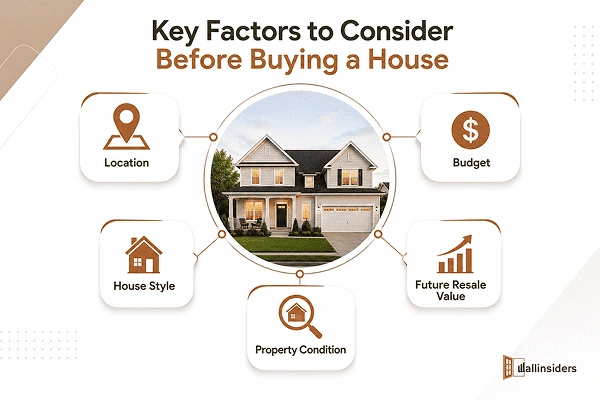
Price, location, house style, size, features, maintenance and repair requirements are some of the top factors that you must consider before buying a single family home. Hence, determine the price range and amenities, along with location and layout, to get the best single-family home, without compromising your lifestyle.
Here are some factors that you must consider before buying a single family house:
1. Location
One of the most important aspects to consider while buying a single-family home is location. It is essential to choose a neighbourhood that aligns with your lifestyle needs and plans. Consider the following aspects:
- Safe neighbourhood and community
- Proximity to major needs, such as grocery stores, pharmacies, gyms, schools, restaurants, and more.
- Easy commute and availability of public transport.
- Friendly locality and the safety of children
Pro Tip:
Try visiting the community at different times of the day and week to get a realistic picture of traffic, noise, and community atmosphere. ‘
Alternatively, you can also take the help of an agent, well-established in the community, who can provide actual property rates in the area.
2. Price and Budget
Consider setting a budget before buying a house. Always leave a room for extra expenses, but avoid overspending or stretching your budget. There are some important things to consider while buying a single-family house:
- Monthly Mortgage Payments
- Down Payments and Closing Cost
- Homeowners Insurances
- Utility Bills
- Maintenance Expenses
3. House Style, Size, and Features
Selecting a home that fits both the current and future needs, and the one which has a practical layout, is often more valuable than having more square footage. Consider:
- The size and number of rooms you need for current and future needs
- Storage Space and Closet
- Accessibility for Aging Family Members
- Requirement of Garage or Basement
- Backyard and Amenities
- Functional Floor Plan and Modern Design
4. Property Condition, Maintenance, and Repair Required
A structurally sound home may have hidden mechanical problems that may lead to expensive repairs. Hence, check every nook and corner of the house before purchasing. Although you can compromise on cosmetic changes, never settle for big repair and maintenance requirements. Check the following:
- Roof Condition and Age
- HVAC system, that is, heating, ventilation, and air conditioning
- Plumbing and Electrical System
- Signs of Water Damage, Mould, or Pests
- Structure and Foundation
Pro Tip:
You must hire a professional home inspector before finalizing the purchase, as they may be able to identify the hidden issues that are not visible during simple walkthroughs.
5. Future Resale Value
Consider buying a home in a neighbourhood that stays in demand. Even if you plan to stay for years, it is essential to think about how easy it will be to sell your home later. Hence, while buying, always look for:
- Home Appreciation Rates
- Neighbourhood
- Local Job Market
- Features that Enhance Buyer’s Appeal
Pro Tip:
Never buy the most expensive house in the neighbourhood, as it may be hard to resell.
Is a Single-Family Home Good For You? Common Mistakes to Avoid While Buying a Single-Family Home
A single family home is one of the best investment options that generate wealth through rental income and value appreciation; however, it may not be the right fit for everyone. Purchasing a house is a significant milestone and a financial decision in your life; hence, it’s important to determine your budget, lifestyle, and needs before finalizing.
A single-family home is right for you if:
- The homeowners are seeking more privacy and fewer shared spaces.
- They require extra room or spaces for growing families.
- Planning a long-term stay in the house
- The homeowners consider it a good investment option that generates rental income to cover their mortgage.
- They are seeking greater freedom to customize and renovate their spaces as per their preference.
Common Mistakes to Avoid While Purchasing a Single-family Home
Here are some common mistakes that you should avoid while purchasing a house:
| S No. | Common Mistakes | Explanation and How to Avoid |
| 1. | Budgeting and Financial Pitfalls | Never ignore additional costs, such as moving out costs, property taxes, insurance, and maintenance. How to Avoid: Keep a contingency fund, and determine your budget before making an offer. |
| 2. | Skipping the Home Inspections | A house may have no visible fault at first, but it may have hidden issues, such as foundation cracks, HVAC issues, and more. How To Avoid: Consider hiring a professional home inspector who can identify hidden issues. |
| 3. | Overlooking Future Needs | Lifestyle changes are frequent in growing families. How to Avoid: Plan about your future needs, and growing children, or aging parents, before buying a house |
| 4. | Not Comparing the Loan and Mortgage Options | Do not always accept the first loan offer that you get. How to Avoid: Consult a specialist who can guide you about the loan and mortgage options, and then select the one that offers maximum benefits. |
Wrapping Up!
To sum up, buying a single family home is one of the biggest financial decisions and milestones in life.
Hence, it becomes increasingly important that important factors, costs, and aspects are considered before finalizing the purchase. The article covers everything from the cost breakdown of buying a single family home to tips and common mistakes to avoid.
Frequently Asked Questions (FAQs)
What is the meaning of a single family home?
What are the downsides of buying a single family home?
A single family home may have a higher upfront cost as compared to a condo or townhouse, and the owner is solely responsible for all the maintenance and repairs, which can be time-consuming and expensive.
What are the things I should consider before buying a single family home?
Price, location, house style, size, features, maintenance and repair requirements are some of the top factors that you must consider before buying a single-family home.
Is buying a house a sound financial decision?
Yes, buying a house is one of the best financial decisions because of its steady value appreciation rates and potential for rental income generation.
Sources:
- Median Home Price By State: How Much Do Houses Cost?: Forbes
- New Residential Sales Press Release: US Census Bureau
Related Post
Single Family Home: Cost Breakdown, Differences, Pros, and Cons, and More
According to the National Association of Realtors, the existing-home sales increased by 3.2% in May 2026, highlighting the growing demand…
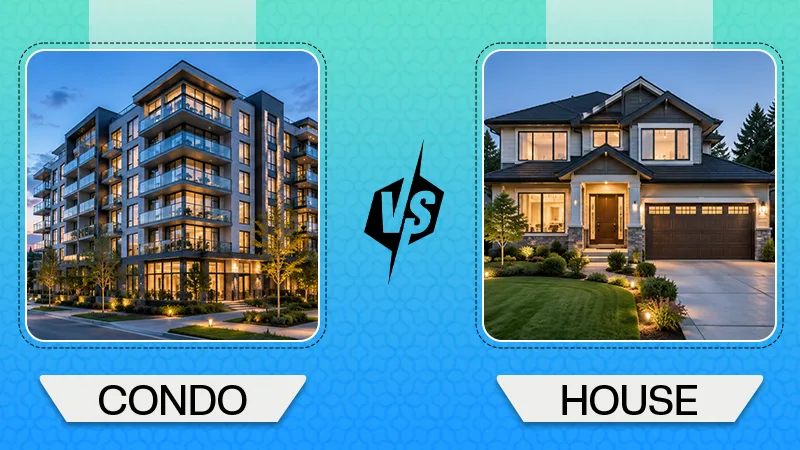
Condo Vs House: Key Differences, Costs, Pros and Cons
Buying a condo vs house comes with its own set of advantages and disadvantages. A condo may be a great…

The Condo vs Coop Analysis with Ownership Structures, Governance & Rules, Amenities, Costs &…
Many people set out to find a perfect home for themselves, but come across confusing terms like condo vs coop.…

What is an ADU (Accessory Dwelling Unit)? Benefits, How to Construct, Cost Breakdown, and…
An ADU (Accessory Dwelling Unit) is a secondary, self-contained home, located on the same lot as the primary residence. Similar…